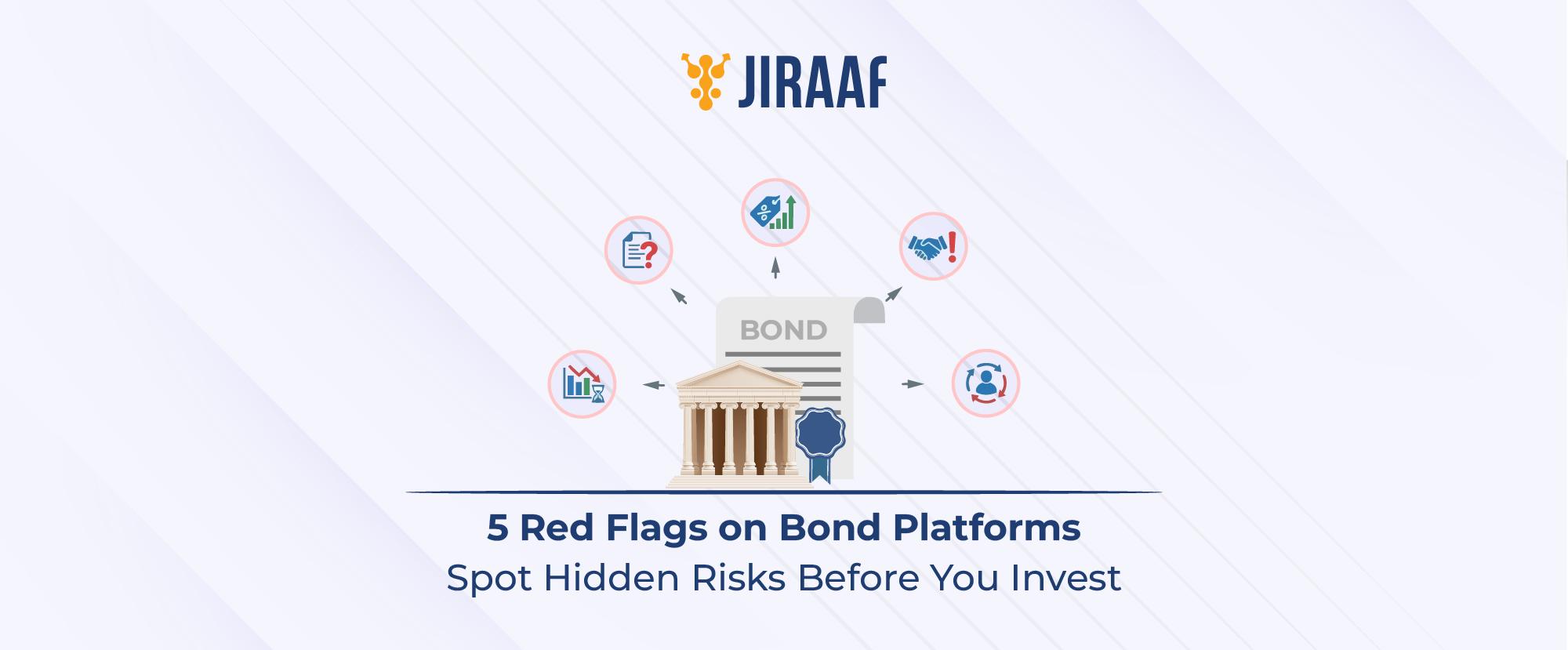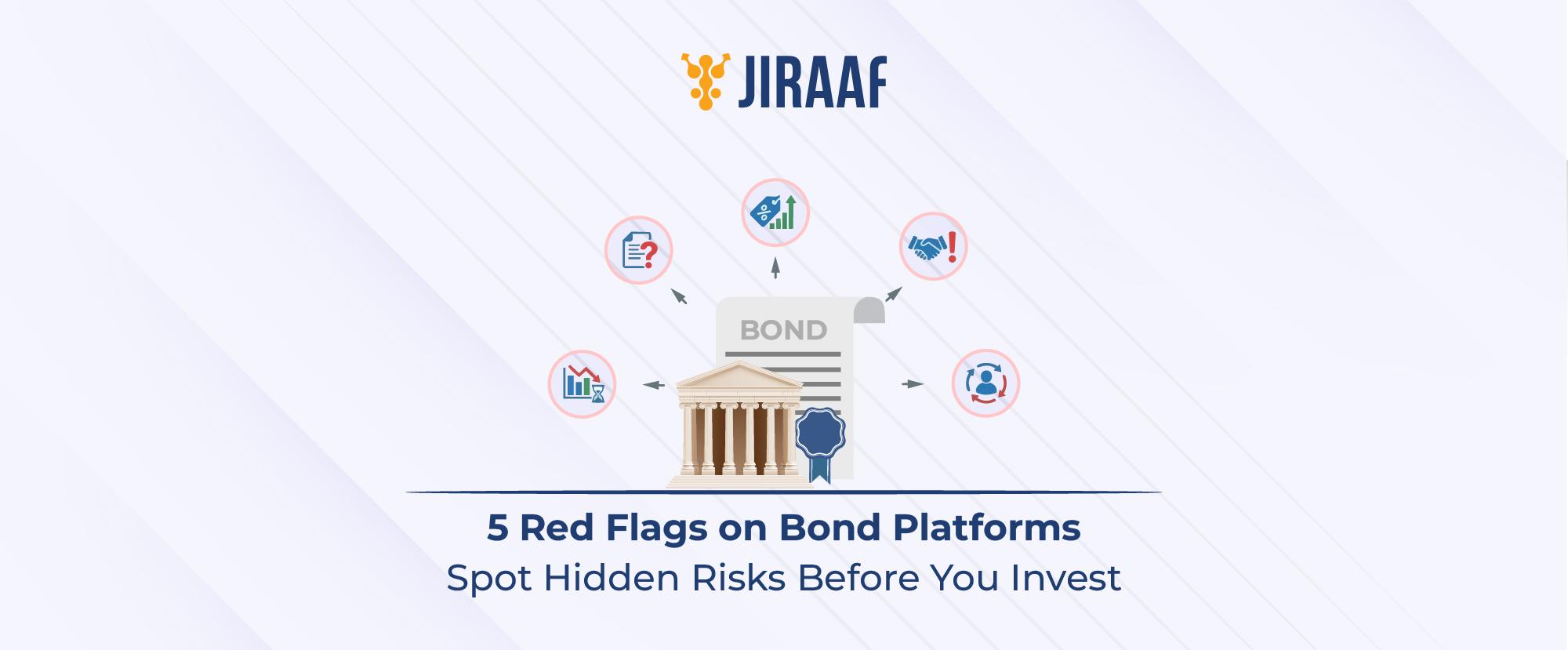
This guide breaks down how retail investors in India can safely evaluate online bond investment platforms before committing their funds. It highlights five critical red flags, from hidden pricing markups and incomplete term sheets to misrepresented credit ratings, to help you spot risky portals and choose SEBI-compliant platforms.
If you’ve spent any time looking for better returns than a 6% bank fixed deposit lately, you’ve likely been bombarded with ads for corporate bonds promising 10% to 12% annual yields. Getting higher predictable income sounds fantastic, until you realize that not every website selling these bonds is looking out for your safety. While SEBI has made buying bonds as easy as ordering dinner online, picking the wrong platform can silently bleed your returns through hidden fees or trap you in risky debt.
Before you click “Invest”, here is how to spot the red flags that separate legitimate bond portals from dangerous traps.
Why Choosing the Right Bond Investment Platform Matters
Selecting the right bond investment platform is just as crucial as evaluating the financial health of the bond issuer. Fixed-income securities involve structural complexities, including credit risk, yield calculations, coupon payment frequencies, and tenure structures. An unreliable portal can obscure key risks, inflate yields through opaque pricing models, or sell unlisted, illiquid debt instruments without adequate disclosures.
When assessing things to check before investing in bonds online, regulatory status, pricing clarity, and documentation access are among investors’ top priorities. Legitimate portals provide transparent data directly sourced from exchanges like the National Stock Exchange (NSE) and Bombay Stock Exchange (BSE). Conversely, flawed portals rely on marketing jargon, high yields, and hidden fee structures that obscure risk.

Red Flag #1: Lack of Transparency in Bond Details
Transparency is the foundation of debt investing. A significant warning sign about a portal is incomplete, obscured, or misleading information regarding yields, fees, and liquidity mechanisms.
- Yield to Maturity (YTM) vs. coupon rate confusion: Misleading portals often prominently display a high coupon rate (e.g., 11.5% per annum) while hiding a lower Yield to Maturity (YTM), or vice versa. Coupon rate represents the annual interest paid on face value, while YTM reflects the total return earned if the bond is held to maturity, accounting for purchase price, compounding frequency, and tenure.
- Hidden markups and unclear pricing: Some non-OBPP intermediaries purchase bonds at lower prices and sell them to retail investors at steep markups without disclosing the actual market price or spread.
- Opaque exit options and secondary market liquidity: Bonds are inherently less liquid than publicly traded equities. Portals that promise “instant liquidity” or “guaranteed buybacks” without explaining secondary market trading mechanisms or potential exit penalties create a false sense of security.
Red Flag Check: Transparent vs. Opaque Portals
| Evaluation Metric | Transparent Bond Platform | Opaque / High-Risk Platform |
| Pricing & Fees | Net YTM clearly displayed; zero hidden markups | Promotes “0% Commission” while inflating bond price |
| ISIN Searchability | Unique 12-digit ISIN provided for independent verification | ISIN withheld or hidden until after payment |
| Settlement Route | Directly through Indian Clearing Corporation (ICCL/NSCCL) | Settlement via third-party or personal pool accounts |
| Regulatory Status | SEBI-Registered OBPP / Broker Member | Unregistered intermediary or unregulated fintech entity |
A comprehensive bond platform checklist requires ensuring that the portal clearly breaks down net yield after all platform fees and provides a direct, verifiable 12-digit International Securities Identification Number (ISIN) for every listed security.
Red Flag #2: Missing or Incomplete Term Sheets
The term sheet is the official legal document outlining every financial and structural property of a bond. A portal that fails to provide direct, downloadable access to the complete Issue Term Sheet and Information Memorandum (IM) presents a major red flag.
Critical Elements to Verify in a Bond Term Sheet
- ISIN: Every authentic corporate bond or NCD in India carries a unique ISIN beginning with “INE” (e.g., INE002A08025). This code lets investors independently verify the security on the NSDL or CDSL depositories.
- Cash flow schedule: The term sheet must explicitly detail exact payout dates for coupon payments (monthly, quarterly, annually, or at maturity) and principal redemption schedules.
- Seniority and security structure: Term sheets define where the instrument sits in the capital structure:
- Secured debt: Backed by specific company assets. In the event of liquidation, secured bondholders have a primary claim on those assets
- Unsecured debt: Not backed by specific collateral, presenting higher risk
- Subordinated / Tier-2 debt: Claims are settled only after senior creditors are paid in full
- Early redemption & call/put options: Check whether the issuer holds a Call Option (right to redeem the bond before maturity) or if the investor holds a Put Option (right to exit early under specific conditions).
If a platform only provides a stylized summary card instead of the raw, official offer document filed with SEBI or the stock exchanges, essential information may be missing. Always cross-check such things before investing in bonds online by reading the source term sheet directly.
Red Flag #3: Poor Disclosure of Risk and Credit Quality
Debt instruments are subject to default risk, interest rate risk, and reinvestment risk among others. Portals that downplay these risks or misrepresent credit ratings mislead investors.
Credit Rating Misrepresentation
In India, SEBI-regulated Credit Rating Agencies (CRAs), such as CRISIL, ICRA, CARE, and India Ratings, assign credit ratings ranging from AAA (highest safety) down to D (default).

- Investment grade: Ratings from AAA down to BBB- are classified as investment grade. Lower tiers within this band (e.g., BBB or BBB-) carry moderate credit risk and higher yield, but remain suitable for cautious investors.
- Speculative/high-yield: Ratings below BBB- (such as BB, B, or unrated debt) indicate higher default risk.
A major red flag occurs when a portal markets BBB- or A-rated bonds as “100% Risk-Free” or compares them directly to Bank Fixed Deposits (which are insured up to ₹5 Lakhs by DICGC). No corporate bond is entirely risk-free.
Portals must prominently feature rating rationale letters from CRAs, detailing the issuer’s financial metrics, interest coverage ratio, debt-to-equity balance, and rating outlook (Stable, Positive, or Negative). Hiding rating downgrades or displaying outdated ratings is a serious warning sign on any bond investment platform.
Red Flag #4: No Clear Issuer Information or Verification
A reliable bond platform checklist prioritizes evaluating the financial health and identity of the issuing entity. Unregulated or unsafe portals often list debt issued by obscure private entities, shell companies, or related-party subsidiaries without revealing the parent company’s balance sheet.
Issuer Details to Verify
- Corporate Identification Number (CIN) & financials: Verify the issuer’s corporate identity, audited financial statements, past three years of balance sheets, profit and loss statements, and non-performing asset (NPA) levels (for NBFC issuers).
- Debenture trustee details: Under SEBI mandate, every public or private listed bond issue must appoint an independent Debenture Trustee (such as Catalyst Trusteeship, Vistra ITCL, or SBICAP Trustee). The trustee safeguards investor interests and holds collateral for secured bonds. If a portal does not disclose the trustee’s name and contact information, do not proceed.
- Use of proceeds: The official documentation must clearly state how the raised capital will be deployed, whether for capital expenditure, debt refinancing, or general corporate purposes.
Portals that obscure issuer profiles make it difficult to perform due diligence on key metrics like the Interest Coverage Ratio (EBIT divided by Interest Expense). An Interest Coverage Ratio below 1.5x indicates that the issuer may struggle to service its interest payments during cash flow downturns.
Red Flag #5: Weak Customer Support and Platform Governance
Platform governance and operational compliance protect your capital during trade execution, clearing, and holding phases. A lack of proper regulatory licensing, security architecture, or responsive customer assistance indicates a weak infrastructure.
Governance Checklist
- SEBI registration status: Verify whether the entity holds a valid SEBI OBPP license or operates under a registered broker entity. This can be cross-checked directly on the official SEBI portal.
- Escrow and clearing route: Capital should never be transferred directly into a private corporate bank account owned by the portal operator. Safe transactions utilize official clearing corporation mechanisms (such as Indian Clearing Corporation Limited – ICCL, or NSCCL) or direct SEBI-mandated escrow mechanisms.
- Depository integration: Purchased bonds must be credited directly to your personal NSDL or CDSL Demat Account. If a portal holds bonds in a “pooled account” or offers synthetic ownership credits without actual Demat transfer, it operates outside standard safety norms.
- Accessible support and grievance redressal: A reputable platform provides a clear escalation matrix, a designated Compliance Officer, and direct integration with the SEBI SCORES (SEBI Complaint Redress System) portal for grievance settlement.

Conclusion
At the end of the day, your bond portfolio should help you sleep better at night, not keep you up wondering where your money actually went. Spotting these five red flags helps you demand the same transparency from financial portals that you’d expect from your bank.
The next time a slick dashboard tempts you with double-digit returns, take five minutes to run through your checklist. Verify the ISIN, check the clearing route, and demand the raw term sheet. A legitimate platform will always welcome your scrutiny; an opaque one will run from it. Protect your principal first, and the yields will take care of themselves.