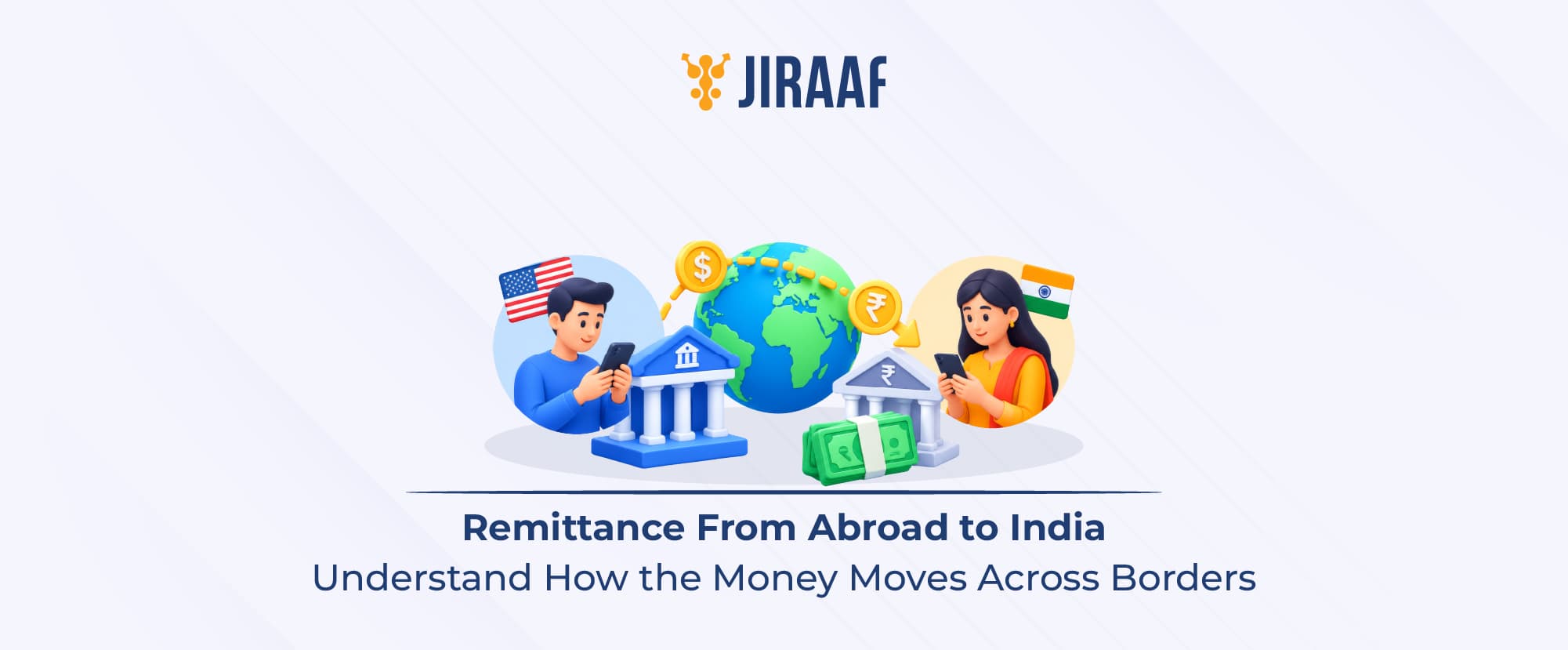
A remittance is the transfer of money from one person or entity to another across geographies. It can be classified as an inward or outward remittance based on the direction of the transfer and involves banks or authorized remittance service providers.
Quick Overview
- Remittance refers to transferring money between individuals or entities across geographies.
- A remitter is the person or entity that initiates the money transfer.
- Inward remittance brings money into India, while outward remittance sends money from India to another country.
- Remittance involves choosing a service provider, providing beneficiary details, reviewing costs, and tracking the transfer.
- Remittance flows support households, foreign currency inflows, and local economic activity.
Every month, millions of Indians living and working abroad send money back home. For one family, it could mean paying rent, covering a child’s education, or simply managing household expenses. But behind that seemingly simple transfer is an entire financial system that moves money across borders, converts currencies, and connects senders with beneficiaries. These transactions are known as remittances.
In this blog, we’ll explore how remittances work, who a remitter is, the different types of remittances, and how these transfers impact the economy. Let’s take a closer look.
What Is Remittance in Banking?
The term remittance comes from the Latin word “remittere,” meaning “to send back” or “to transmit.”
In banking, a remittance is a transfer of money from one party to another, usually across borders, for purposes such as family support, gifts, education fees, or payments for goods and services.
Simply put, consider a relative who lives or works in the US and sends money back home every month. This process of transferring funds is called a remittance.
Who Is a Remitter in Banking?
A remitter is the person or entity that initiates a transaction to send money to another individual, often to their home country. For the transaction to take place, the remitter has to provide the recipient’s details to the bank or remittance service provider, including their name, banking details, contact number, and the purpose of the transaction. The transaction can take place through difference types of remittance channels, depending on the nature of the transaction.
For families that depend on funds sent from relatives working or living abroad, these remittances can serve as an important financial safety net, helping them meet regular expenses and other financial needs.
What Are the Different Types of Remittances?
Remittances are broadly classified by the direction the money moves. In India, a transfer coming into the country is an inward remittance, while a transfer sent from India to another country is an outward remittance.
Inward Remittance
An inward remittance refers to money transferred from another country to a recipient in India. The sender is typically an NRI or another person resident outside India.
For example, an Indian professional working in Singapore sends money to their parents in Pune to cover household expenses. The funds enter India through a bank or authorized remittance channel and are credited to the recipient’s account.
Outward Remittance
An outward remittance refers to money transferred from India to a recipient in another country. Individuals send funds abroad for purposes such as education, medical expenses, travel, or supporting family members.
For example, a parent in India transfers money to their daughter studying in Australia to pay for her accommodation and other education-related expenses. The funds move from the Indian sender to the overseas beneficiary through an authorized banking or remittance channel.
Under the RBI’s Liberalized Remittance Scheme (LRS), resident individuals can remit up to USD 250,000 per financial year for permitted purposes. Permitted current account uses include travel, education, medical treatment, gifts, and maintenance of close family members abroad.
Regardless of the direction of the transfer, the remittance follows a series of steps before the funds reach the recipient.
How Does Remittance of Funds Work?
In India, the Foreign Exchange Management Act (FEMA) and applicable RBI guidelines govern cross-border remittances. The process typically involves the following steps:
- Choose a service provider:
Choose a bank or authorized remittance service based on fees, exchange rates, and transfer time.
- Provide beneficiary details:
Enter the recipient’s name, account number, and relevant banking details. For domestic transfers, this includes details such as the IFSC. International transfers typically require the recipient’s bank account information and SWIFT code.
- Review the total cost:
Check the applicable transaction fees, currency conversion rate, and other charges before confirming the transfer. For international remittances, the exchange rate also affects the final amount the beneficiary receives.
- Initiate and track the transfer:
Submit the transaction through the chosen service provider. The provider will process the remittance and typically offer transaction updates through SMS, email, or an online tracking facility.
A remittance may begin as a personal transfer, but its impact does not end with the recipient. These flows also play a role in the wider economy.
How Remittances Impact the Economy?
Remittances help maintain a steady supply of foreign currency, support the country’s foreign exchange reserves, and strengthen its ability to meet external financial obligations. In countries where remittances form a significant share of GDP, these inflows can also become an important contributor to economic output, sometimes exceeding FDI inflows.
For example, India was the world’s largest recipient of remittances in 2024, receiving over from Indian USD 134 living and working abroad.
This impact eventually reaches households and the domestic economy. Families use remittances for education, healthcare, housing, and everyday expenses. This spending creates demand for local goods and services, allowing money received from abroad to circulate through the domestic economy and support local businesses.
Conclusion
A remittance may start with one person sending money to another, but its impact does not end there. When millions of such transactions flow into a country, they strengthen foreign currency inflows, support households, and create demand across local economies. Together, these individual transfers form a significant part of the global financial system. Understanding remittances, therefore, means looking beyond the transaction itself and recognizing how money sent home by individuals can influence households, markets, and economies at scale.