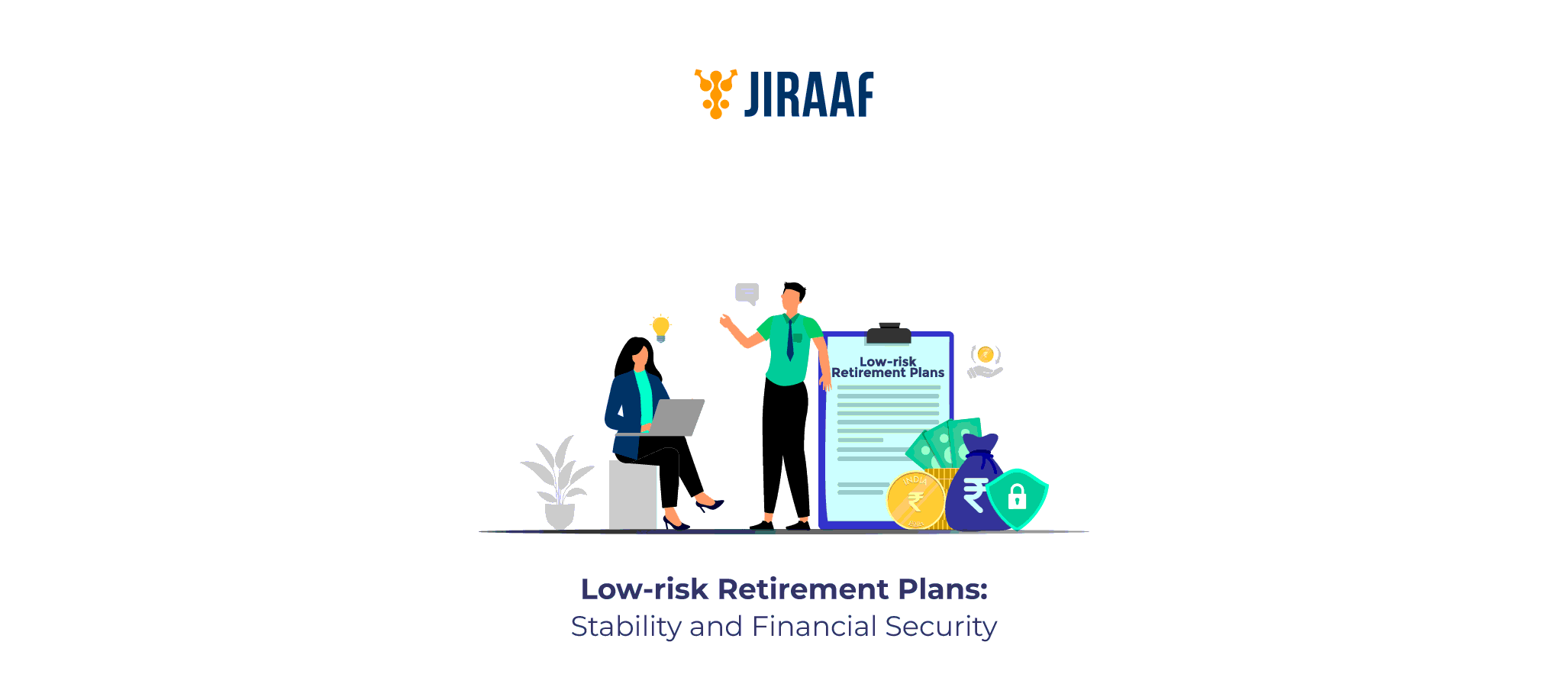
Many people believe that after years of working and saving, they have accumulated enough to live comfortably after retirement. However, with expenses like healthcare and living costs rising every year, the money saved during your working years may not be enough. To ensure a secure and worry-free retirement, it is essential to create a plan that generates multiple sources of income, so you don’t have to work during your retirement; your money works for you.
In this blog, we will discover low-risk investment instruments that will help you protect your capital, earn a steady income, and diversify your overall portfolio.
Why Retirees Should Choose Low-risk Investments
To earn passively during your retirement, it is advisable to look for investments that offer
capital protection and steady income. First ensures that the savings you built over decades are not exposed to significant market fluctuations or risky assets. And the latter helps you manage monthly expenses such as food, healthcare, and household costs without financial stress. So, let’s look at some of the best low-risk investment options available for you in India.
Top Low-risk Investment Options for Retirees
When choosing low-risk investments, you should look for options that combine safety, liquidity, and consistent income. Here are some suitable choices:
- Investment-grade corporate bonds
Investment-grade corporate bonds are issued by financially stable private and public companies with credit ratings ranging from AAA to BBB-. When you invest in these bonds, you lend money to the issuer, who pays you fixed interest at regular intervals and returns the principal at maturity. You can start investing with as little as ₹1,000. Depending on the issuer and tenure, these bonds typically offer fixed returns between 8% and 14%.
- Unit linked insurance plans (ULIPs)
ULIPs allow you to invest while also offering life insurance coverage. For retirees, ULIPs with a debt-oriented fund allocation can be ideal since they provide moderate returns with lower market exposure.
- Annuity plans
An annuity converts a lump sum amount into a guaranteed stream of income. It is beneficial if you want a predictable monthly income without worrying about market ups and downs. This ensures regular payments for a fixed period or for life, depending on the plan you choose.
While these investments offer stability, government-backed options take security a step further by providing sovereign guarantees.
Government-backed Senior Citizen Investment Schemes
Government-backed schemes are among the safest choices for retirees. They not only provide guaranteed returns but also ensure the protection of your principal amount.
- Senior citizen savings scheme (SCSS)
Senior citizen saving scheme is one designed for retirees in India. It offers attractive interest rates (8.2% as of January 2026) and quarterly interest payouts, helping retirees manage regular expenses efficiently.
- National pension system (NPS)
Although NPS is commonly associated with working professionals, it can still benefit you as it maintains a mix of equity and debt investments. NPS helps generate inflation-beating returns while maintaining overall portfolio safety.
Once you have a strong safety net, the next step is to focus on creating consistent monthly income options that support your lifestyle.
Best Fixed-income Plans and Monthly Payout Options
When market volatility feels overwhelming, fixed-income options offer you with certainty of returns.
- Fixed deposits (FDs)
Bank fixed deposits remain one of the most trusted choices for senior citizens. You can opt for senior citizen FDs to earn 0.5% to 1% more in interest.
SWPs offered by mutual funds allow you to withdraw a fixed amount at regular intervals while keeping the rest of your investment growing. It provides flexibility and the comfort of a steady income.
This scheme offers government-backed safety along with monthly interest payouts. It is a simple, low-risk investment that provides consistent income (currently giving 7.4% interest as of 29th January 2026)
While these options ensure a steady income, building a resilient portfolio requires spreading investments across various asset types.
How to Diversify a Low-risk Retirement Portfolio
Diversification is the key to long-term financial stability. Even within low-risk investments, it is essential to distribute money across different instruments that do not move in the same direction.
For example, a mix of fixed deposits, government schemes, and high-rated bonds ensures that even if one asset class underperforms, others can balance the overall return. Diversification helps maintain stability and protects your income flow during uncertain times.
By carefully selecting assets with little or no correlation, you can enjoy consistent returns along side some tax benefits.
Tax Benefits on Senior Citizen Investment Schemes
Senior citizens are eligible for several tax benefits that can further enhance their savings.
- Higher basic exemption limit: Under the Old Tax Regime, retirees have a higher income exemption limit of ₹3 lakh (and ₹5 lakh for those 80+) compared to ₹2.5 lakh for younger taxpayers.
- Deduction on interest income (Section 80TTB): Up to ₹50,000 of interest earned from bank deposits or post office savings is tax-free for senior citizens.
- Higher deduction for health insurance (Section 80D): You can claim up to ₹50,000 for health insurance premiums, which helps reduce their tax burden while ensuring medical security.
These benefits not only lower tax liability but also improve the overall post-tax return on low-risk investments.
Conclusion
Low-risk investments bring stability to your financial life when you need it most. By prioritizing safety and predictable income, they help you meet everyday expenses without being affected by market ups and downs. More importantly, these investments give you reassurance that your savings are steadily supporting your lifestyle. With your money quietly doing its job, you can focus less on finances and more on enjoying each month with comfort and peace of mind.