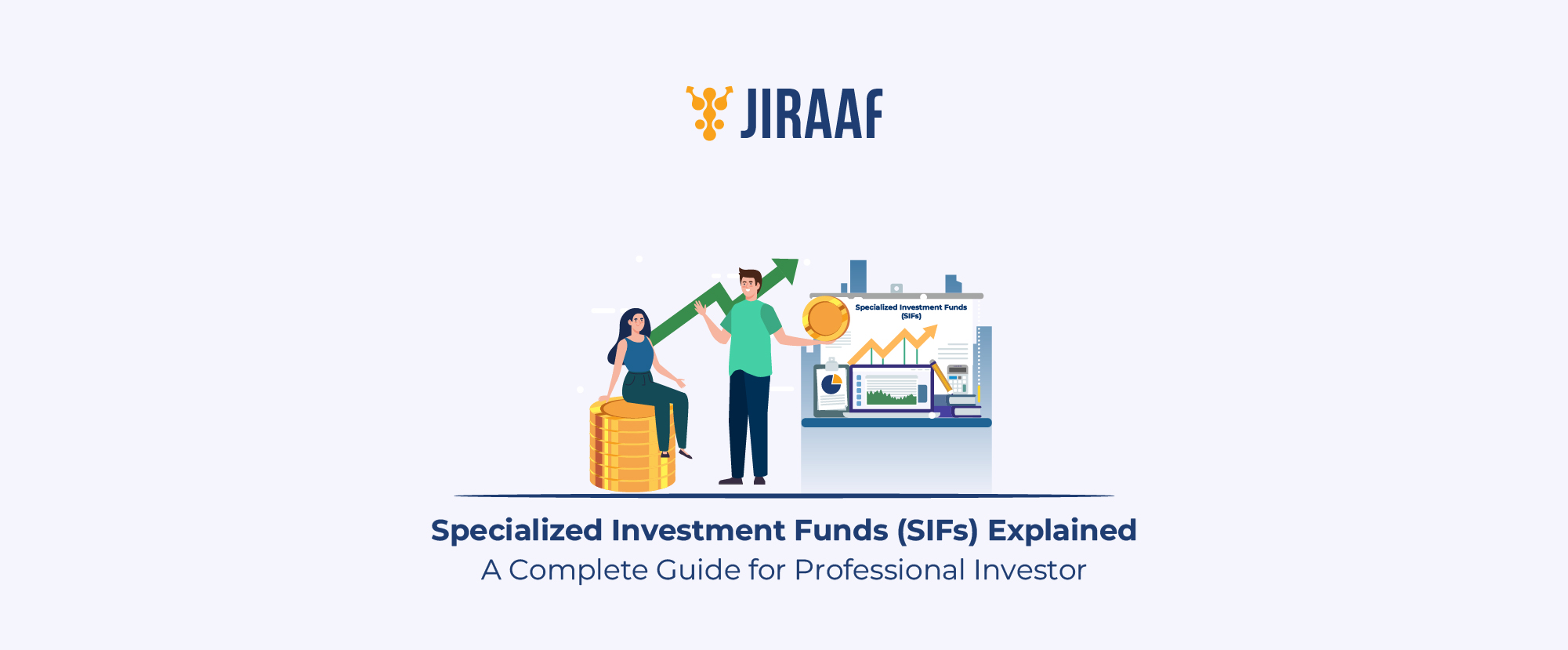
A Specialized Investment Fund (SIF) is a flexible investment vehicle designed primarily for institutional investors, well-informed investors (including HNIs), and other experienced market participants. Known for their adaptability in asset allocation and light-touch regulation, SIFs have become a preferred choice for sophisticated investors seeking diversified exposure across asset classes such as private equity, real estate, infrastructure, and debt instruments.
This article explains what an SIF is, how it works, its benefits, and how it differs from traditional investment vehicles.
What is a Specialized Investment Fund?
A specialized investment fund is a type of collective investment scheme that allows pooling of capital from multiple qualified investors for investment in a wide range of assets. Unlike traditional mutual funds, which are designed for retail participation and subject to stricter investment limits, SIFs offer greater flexibility in their investment strategy, asset types, and risk exposure.
SIFs are typically established under specific regulatory frameworks in global financial hubs, such as Luxembourg, and are structured to meet the needs of professional investors. In India, while the term “SIF” is not directly used in domestic regulations, comparable structures exist in the form of Alternative Investment Funds (AIFs) under SEBI guidelines.
Structure and Regulation of SIFs
The structure of an SIF generally consists of:
- Fund Manager: Responsible for day-to-day investment decisions
- Depositary: Holds and safeguards fund assets (Required under the AIFMD framework for most SIFs)
- Administrator: Handles compliance, reporting, and investor communication
- Investors: Institutional players, well-informed investors, and accredited investors who meet the eligibility criteria
From a regulatory perspective:
- In jurisdictions like Luxembourg, SIFs are regulated under the SIF Law of 13 February 2007, supervised by the Commission de Surveillance du Secteur Financier (CSSF).
- In India, comparable structures fall under SEBI (Alternative Investment Funds) Regulations, 2012, with specific investment norms depending on the AIF category.
Regulations for SIFs are deliberately less restrictive compared to retail mutual funds. This is because their target audience consists of sophisticated investors who understand and accept higher risk in exchange for potentially higher returns.
Benefits of Investing in SIFs
Specialized investment funds are designed to offer investors flexibility, efficiency, and access to a wider range of investment strategies compared to traditional pooled investment vehicles. Some of the most notable benefits include:
- Broad investment scope
Unlike regulated retail funds that have strict asset allocation limits, SIFs can invest in a diverse set of asset classes, from equities, bonds, and private equity to real estate, infrastructure, and alternative instruments. While flexible, they generally adhere to a risk-spreading principle, such as not investing more than 30% of assets in securities of the same type issued by the same issuer.
- Efficient regulatory framework
While SIFs are regulated, they benefit from lighter compliance requirements compared to retail-focused funds. This creates an environment where fund managers can act quickly to capitalize on market opportunities without being slowed down by excessive bureaucratic procedures.
- Tailored investment strategies
SIF structures are ideal for customized portfolio construction. They allow managers to create strategies that match specific risk-return profiles, sector preferences, or geographic exposures of professional investors.
- Attractive risk-adjusted returns
The ability to diversify across alternative and less correlated asset classes can improve portfolio resilience and enhance long-term returns, especially during volatile market cycles.
- Tax Efficiency
Many jurisdictions offer favorable tax treatment to SIFs and their investors. In Luxembourg, SIFs are typically exempt from income and wealth taxes, paying only an annual subscription tax (taxe d’abonnement) of 0.01%.
Who Can Invest in an SIF?
SIFs are not open to the general public. They are designed for:
- Institutional investors: Banks, pension funds, insurance companies, sovereign wealth funds.
- Well-informed investors: Investors meeting the minimum investment criteria who state in writing that they are well-informed (including HNIs).
- Accredited investors: Those who qualify under jurisdiction-specific eligibility tests.
In Luxembourg, for instance, the minimum investment in an SIF is EUR 125,000, unless the investor can demonstrate equivalent expertise. In India, AIFs have their own minimum ticket size—currently ₹1 crore per investor, with the exception of Social Impact Funds (formerly Social Venture Funds) and schemes for employees/directors of the AMC, where the minimum is ₹25 lakh.
SIF vs Traditional Mutual Funds
| Feature | Specialized Investment Fund | Traditional Mutual Fund |
| Target Investors | Institutional & Accredited | Retail & Institutional |
| Regulation | Flexible, light-touch | Heavily regulated |
| Minimum Investment | High | Low |
| Asset Scope | Broad – includes private markets, real estate, alternatives | Primarily listed equities & bonds |
| Liquidity | Often closed-ended with lock-in | Generally open-ended |
| Risk Level | Higher | Moderate to low |
SIFs focus on bespoke, high-potential strategies and are suited for investors comfortable with illiquidity and higher volatility.
How to Invest in an SIF?
Step 1: Check eligibility
Confirm that you meet the minimum wealth, income, or professional investor criteria in the relevant jurisdiction.
Step 2: Select the right fund
Evaluate SIFs based on asset focus, investment strategy, historical performance, and fund manager track record.
Step 3: Understand the terms
Review fund documents such as the Private Placement Memorandum (PPM), subscription agreement, and fee structure.
Step 4: Subscription & compliance
Submit KYC/AML documents and meet the minimum subscription requirement.
Step 5: Monitor your investment
Track performance reports, attend investor briefings, and assess fund updates regularly.
Conclusion
Specialized investment funds stand out as a dynamic investment vehicle tailored for sophisticated and institutional investors seeking diversification, flexibility, and access to a wider range of asset classes. By operating under a lighter yet well-defined regulatory framework, SIFs enable fund managers to pursue innovative investment strategies that can cater to niche markets, alternative assets, and high-growth opportunities.
Their inherent advantages, such as flexible structuring, global investment reach, and the ability to adapt to various investor profiles, make them a preferred choice for those with the expertise and capital to participate. However, SIFs are not designed for every investor. They require a higher minimum investment, a solid understanding of complex asset classes, and a readiness to take on higher risk in exchange for potentially enhanced returns.
For eligible investors, SIFs can serve as a powerful portfolio tool by balancing traditional assets with alternatives, mitigating risk through diversification, and opening pathways to returns that might be inaccessible through conventional funds. As global markets evolve, the role of SIFs in wealth preservation and growth is only expected to strengthen, making them a compelling consideration for long-term investment strategies.