AEPS is a secure, bank-led digital framework that allows customers to perform basic banking tasks using only their Aadhaar number and biometric authentication. This blog explains how the system works, outlines its core services and benefits for financial inclusion, and addresses recent 2026 security updates, like face authentication.
Banking in India is not limited to branches, debit cards, or even smartphones. For millions of people, especially in smaller towns and rural regions, access to money often depends on something far simpler: identity.
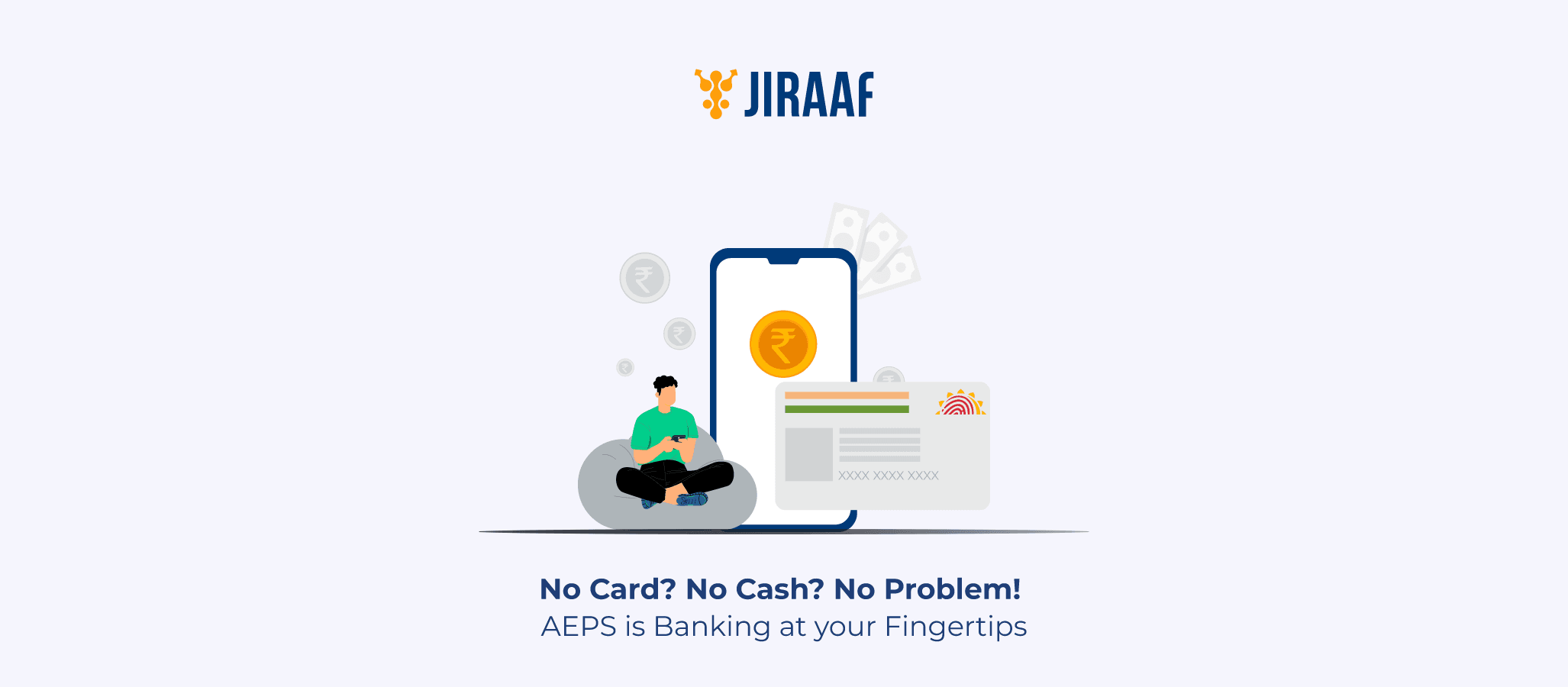
That is exactly where the Aadhaar Enabled Payment System (AEPS) becomes transformational. Instead of requiring cards, PINs, or digital literacy, AEPS allows individuals to access essential banking services using just their Aadhaar number and biometric authentication. This makes everyday transactions like withdrawing cash, checking balances, or transferring funds possible even in areas where traditional banking infrastructure remains limited.
More importantly, AEPS represents a larger shift in how financial systems can reach underserved populations through trust-based digital verification. With newer security upgrades like face authentication and stronger agent-level controls introduced in 2026, AEPS continues to evolve as a critical layer in India’s inclusion-focused banking ecosystem.
In this blog, we explore what AEPS is, how it functions, the services it enables, and why it remains one of the most impactful innovations in grassroots digital banking.
What is Aadhaar Enabled Payment System?
The Aadhaar-enabled payment system is a digital banking framework led by banks and overseen by the National Payments Corporation of India (NPCI) under the Reserve Bank of India’s (RBI) direction. This system facilitates access to Aadhaar-linked bank accounts for various services, including cash withdrawals, balance inquiries, and fund transfers. It is designed to be adaptable for everyone, making banking more inclusive.
By enabling secure and convenient banking transactions without the need for debit cards, PINs, or signatures, AEPS especially benefits individuals in rural and semi-urban areas. To ensure high security, the NPCI has recently mandated two-factor authentication for agents and face authentication for users.
AEPS Meaning and Purpose in Digital Banking
AEPS is a payment system that uses Aadhaar as an access key for banking and identity verification. Without the need for traditional banking tools, direct access to Aadhaar-linked accounts is made possible, and banking transactions can now be completed using Aadhaar authentication.
The primary purpose of AEPS is to promote financial inclusion by giving people in rural and semi-urban areas easy access to basic services like balance inquiries, withdrawals, and deposits. Through this approach, formal banking has become more accessible for people living in rural and semi-urban parts of the country. It has also reduced dependence on physical bank branches.
How Does AEPS Work?
The functioning of AEPS is based on Aadhaar authentication, and every transaction is carried out in a step-by-step manner. The process can be explained as follows:
- Customer identification: The agent receives and inputs the Aadhaar number and the bank name (IIN) into a micro-ATM, a small banking machine.
- Service selection: The customer selects among the services offered: cash withdrawal, deposit, balance query, or fund transfer.
- Biometric authentication: An iris scan, fingerprint scan, or face scan of the individual is taken, and their identity is cross-referenced with Aadhaar data.
- Transaction processing: After successful authentication, the customer’s bank receives the request, and the account is accessed.
- Completion of transaction: A receipt is typically given by the agent or device, and the transaction’s outcome is displayed instantly.
Services Offered Through AEPS
Several financial services are allowed to be performed under AEPS, and each of them is enabled with Aadhaar-based authentication. The key services are:
- Balance enquiry: The money available in the bank account can be viewed immediately by providing Aadhaar details at a micro-ATM or with the help of a banking agent.
- Cash withdrawal: It is possible to securely withdraw funds from the account without a debit card or PIN by using Aadhaar and biometric verification.
(Note: Most banks impose a daily withdrawal limit of ₹10,000 for AEPS.)
- Cash deposit: People who do not have access to traditional branches can conveniently deposit money into an Aadhaar-linked bank account.
(Note: As of 2026, cash deposits are increasingly limited to the customer’s home bank points due to fraud-prevention protocols.)
- Aadhaar to Aadhaar fund transfer: Direct money transfers between two bank accounts connected to Aadhaar are fast and paperless.
- Mini statement: A small list of recent transactions is provided so account activity can be checked without visiting the bank.
- Purchase: Using AEPS via Aadhaar Pay, payments for goods and services can be made with Aadhaar authentication, completing the transaction.
- Self-help Group (SHG) transaction: Self-help groups are permitted to manage their own accounts and provide basic services, including fund transfers, withdrawals, and deposits.
Benefits of AEPS in Financial Inclusion
AEPS has been introduced to make banking more accessible, secure, and convenient, especially for people who were previously excluded from formal financial services. Its key benefits include:
- Easy access to bank accounts: Without the need for debit cards or PINs, Aadhaar numbers or virtual IDs can be used to access bank accounts and perform standard operations like cash withdrawals, deposits, and balance checks.
- Secure and interoperable transactions: Transactions are simple and hassle-free since financial services can be utilized safely across banks. This interoperability allows customers to use any bank’s micro-ATM regardless of where their account is held.
- Electronic KYC services: Using Aadhaar for identification and address proof, bank accounts can be opened in any location. All Indian banks and non-bank organizations have access to a real-time eKYC infrastructure, which facilitates effective customer verification. Because paperless KYC is enabled, holding physical documents is less necessary.
- Merchant payments made easy: To make transactions easy and secure for both buyers and sellers, merchants are permitted to accept Aadhaar numbers or virtual IDs along with biometric authentication.
Challenges and Limitations of AEPS
- Dependence on technology: Issues with fingerprint scanners and a reliable internet connection can prevent transactions from being completed.
- Limited services: Complex services like loans or investments are not available; only basic banking activities like cash withdrawals, deposits, balance checks, and fund transfers are supported.
- Privacy and security concerns: The use of biometric data for authentication raises the possibility of fraud or misuse if appropriate safeguards are not maintained. NPCI has introduced “liveness detection” to prevent the use of fraudulent fingerprint clones.
- Low awareness and access: There may not be many local agents or micro-ATMs available, and many people, particularly in rural areas, might not be aware of AEPS.
- Infrastructure issues: In some areas, consistent use of AEPS can be challenging due to a lack of internet connectivity or electricity.
- Aadhaar requirement: AEPS can only be used by people who have an Aadhaar number, so those without one cannot access the system.
AEPS vs Other Digital Payment Modes
AEPS differs from other digital payment methods such as UPI, debit/credit cards, and mobile wallets in several ways:
| Feature | AEPS | Other Digital Payment Modes |
| Authentication | Biometric authentication using Aadhaar is required | Passwords, PINs, OTPs, or app-based authentication are used |
| Access | Banking is allowed without debit/credit cards or smartphones | Debit/credit cards or smartphones are usually required |
| Services | Only basic services like withdrawals, deposits, balance checks, and fund transfers are supported | A wider range of services is offered, including bill payments, online shopping, and investments |
| Reach | Services are extended to rural and semi-urban areas through micro-ATMs and banking agents | Mostly urban and semi-urban coverage depends on internet and app availability |
| Financial Inclusion | Focused on bringing unbanked populations into the formal banking system | Primarily designed for users already in the banking ecosystem |
| Dependence on Technology | Requires fingerprint scanners and internet, but no smartphone is needed | Requires smartphones, apps, or cards; internet is mandatory |
Conclusion
AEPS is often discussed as a banking service, but its real significance lies in what it enables structurally: participation. It brings formal financial access closer to communities that have historically operated outside the reach of mainstream banking by removing barriers.
As India’s digital economy grows, systems like AEPS highlight an important truth: meaningful innovation is not always about advanced apps or urban-first solutions, but about building trust, simplicity, and usability into the foundation of finance.
Going forward, the success of AEPS will depend not only on technological upgrades but also on awareness, responsible implementation, and safeguards that ensure inclusion does not come at the cost of privacy or security. If strengthened thoughtfully, AEPS can remain one of the most grounded examples of digital progress serving real everyday needs.