Summary: A cheque is a negotiable instrument that authorizes a bank to transfer funds from the issuer’s account to the recipient. This guide covers cheque elements, cheque number, different types of cheques, validity, and best practices for safe usage.
Quick Overview
- A cheque is a written instruction that directs a bank to pay a specified amount from the drawer’s account to the payee
- Every cheque carries a set of essential elements: cheque number, date, payee details, amount, signature, MICR code, and IFSC code
- Bearer, order, crossed, account payee, self, banker’s, post-dated, stale, and cancelled cheques each carry a distinct rule for who can encash them and when
- Filling a cheque correctly and choosing the right type for the transaction cuts down on payment errors and reduces the chance of fraud
Even though digital payments in India account for over 97% of daily transactions, cheques remain important for high-value transactions such as security deposits, real estate transactions, and large business payments. Because these transactions often involve substantial amounts, choosing the right type of cheque becomes an important part of reducing payment risk and protecting against fraud and unauthorized use.
This guide explains what a cheque is, its key elements, including the cheque number, the different types of cheques and their uses, as well as how to fill out and use one safely.
What is a Cheque?

A cheque is a written instruction that tells a bank to pay a fixed sum from one account into another. Legally, a cheque is a negotiable instrument under the Negotiable Instruments Act, 1881, drawn on a specified bank and payable on demand. Depending on its type, it may also be transferred to another person before it is encashed.
A cheque transaction involves multiple parties:
- The drawer is the account holder who fills the cheque and signs it
- The drawee is the specific bank holding the drawer’s account, the one that releases the funds
- The payee is whoever the cheque names to receive the money
Once deposited, the cheque is processed through the Reserve Bank of India’s Cheque Truncation System (CTS). Instead of physically transporting the cheque, banks exchange its digital image electronically. The drawee bank then verifies the cheque details, such as the signature, account status, and fund availability, before authorizing payment and settling the transaction electronically. Under the current CTS framework, banks process cheques through continuous clearing, enabling faster clearing and, in many cases, same-day settlement.
The RBI had also proposed a three-hour confirmation timeline in its December 2025 circular to further speed up cheque processing, but its implementation has been deferred until further notice.
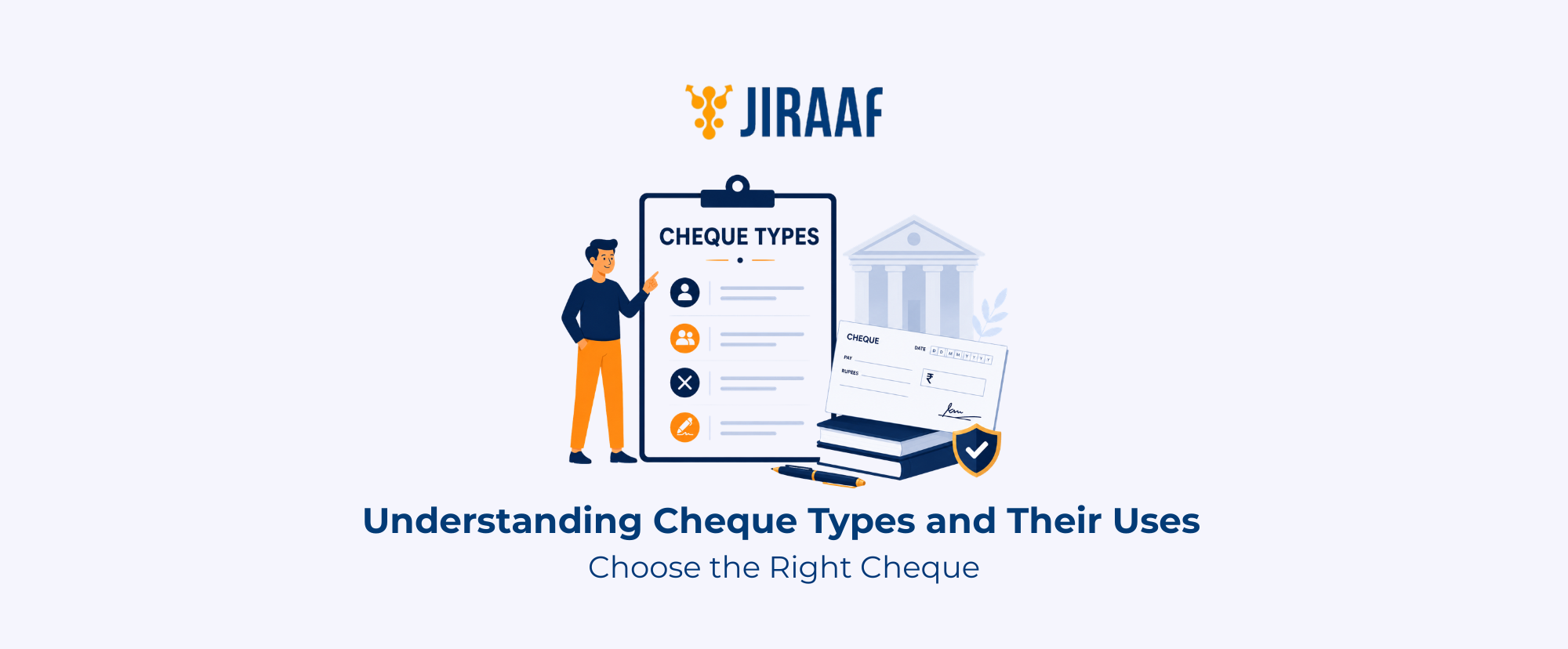
Parts of a Cheque
Every cheque carries a fixed set of fields that establish what is being paid, to whom, and on whose authority.
- Date: The day, month, and year that determines when the cheque becomes valid for encashment
- Cheque number: A unique six-digit number printed on the cheque that helps identify and track the specific cheque
- Payee name: It names the exact person or organization authorized to receive the funds
- Amount in words and figures: The transaction value is written twice, in text and in numbers
- Signature: The account holder’s mark that authorizes the bank to release the money
- Account number: Identifies the account from which funds will be debited
- Bank name and branch: The financial institution and its specific location holding those funds
- MICR code: A magnetic ink sequence that lets machines identify the bank and branch automatically
- IFSC: An alphanumeric code that identifies the specific bank branch for electronic fund transfers
Filling these fields correctly gets a cheque past the counter, but how it’s processed from there depends on the type of cheque you’re using.
Types of Cheques
When you request a cheque book, the bank issues a book of blank check leaves corresponding to your account. Every cheque leaf in a chequebook looks similar. You determine the type of cheque based on the way you fill in the details and mark the cheque. The details written on the cheque determine who can receive the payment and how the bank processes it.
The common cheque types are:
Bearer Cheque

A bearer cheque is payable to the person who presents it. Generally, the word bearer or cash is written in the payee name area. Depending on the circumstances, the bank may require identification before making a payment. If you lose a bearer cheque before it is presented for payment, anyone who finds it may be able to present it for payment, making it riskier than most other cheque types.
Order Cheque

An order cheque allows only the person or organization named on it to receive the payment. The payee can also endorse it to someone else if needed. The bank verifies the payee’s identity before releasing the payment. This makes an order cheque more secure than a bearer cheque and reduces the risk of unauthorized encashment.
Account Payee Cheque

An account payee cheque credits the payment only to the bank account of the named payee. Banks do not allow cash withdrawal over the counter against this type of cheque. Since the funds go directly into the payee’s account, you cannot freely transfer this cheque to another person. This makes it one of the safest cheque types for business and personal payments.
Crossed Cheque

A crossed cheque carries two parallel lines across its face to ensure the payment goes through a bank account instead of being paid in cash. This makes the transaction easier to trace. Crossing a cheque does not prevent it from being transferred to another person unless it also carries the words “Account Payee”. On its own, crossing improves payment security but does not restrict the final beneficiary.
Open Cheque
An open cheque does not have crossing lines so that you can present it for cash at the drawee bank. The bank processes the payment if all other cheque details are valid. The ease of cash withdrawal also increases the risk of misuse. If an open cheque falls into the wrong hands before payment, someone else may be able to encash it.
Self Cheque

A self cheque allows you to withdraw cash from your own bank account. You write “Self” as the payee, and the bank verifies your signature before making the payment. You can use self-cheques when you need cash without using a debit card or ATM. If a signed self-cheque is lost before it is presented, it can expose you to financial risk because someone else may try to use it.
Banker’s Cheque
The bank issues a banker’s cheque after it receives the payment amount from you. Since the bank issues the cheque using its own funds, the cheque does not bounce because of insufficient funds. You can use a banker’s cheque for high-value payments such as buying property or a vehicle. The bank can still reject it if it becomes stale or shows signs of alteration.
Post-Dated Cheque
A post-dated cheque carries a future date, so the bank will not process it before that date. You can deposit it earlier, but the bank releases the payment only on or after the date written on the cheque. You can use a post-dated cheque for future payments such as EMIs, rent, or installments. It lets you commit to a payment today while scheduling the transfer for a later date.
Ante-Dated Cheque
An ante-dated cheque carries a date earlier than the day you present it for payment. The bank processes it as long as it remains within its validity period. The validity period is always three months or 90 days from the date written on the cheque, regardless of when you present the cheque. You may use an ante-dated cheque when you need to record a payment against an earlier transaction. Once the validity period expires, the cheque becomes stale.
Stale Cheque
A stale cheque is one presented after its validity period has expired. In India, a cheque is generally valid for three months from the date written on it. Your bank will not process a stale cheque, even if all the other details are correct. For the payment to go through, you will have to present a new cheque.
Cancelled Cheque

A canceled cheque has two parallel lines across it with the word “CANCELLED” written between them. You cannot use it to make or receive a payment. You can use a canceled cheque to verify your bank account details during KYC, loan applications, or electronic payment registration. Although it has no payment value, you should share it only with trusted organizations.
Difference Between a Bearer Cheque and an Order Cheque
A bearer cheque works when speed matters more than security, handing a trusted messenger quick access to cash. An order cheque works when the payment has to reach one specific person, and the bank verifies the identity of the person before chasing the cheque.
| Feature | Bearer cheque | Order cheque |
| Payment recipient | Anyone holding the physical document | Only the specific person named on the line |
| Transferability | Transferred simply by handing it over | Transferred by signing the back (endorsement) |
| Security level | Low; highly vulnerable to theft | High; requires identity verification at the counter |
| Common scenario | Quick cash withdrawal by a trusted messenger | Paying a specific vendor or individual securely |
How to Fill and Use a Cheque Correctly?
Filling out the cheque correctly is essential for smooth processing and to reduce exposure to financial fraud.
A bank will reject or dishonor the cheque if there is a mismatch in any of the core elements:
- Write the date clearly in the designated DD/MM/YYYY boxes
- Write the payee’s name exactly as their legal name
- Write the amount in both numbers and words
- Make sure your signature matches the one on file from your account opening form, and don’t let it cross into the MICR line or any printed code below it
As long as the mandatory fields are written clearly and correctly, the banks will process the cheque. To minimize fraud, some of the general practices followed while filling the cheque are:
- Draw a straight horizontal line through any empty space remaining on the pay line after you write the payee’s name. This prevents anyone from adding a second name.
- Write the numbers tightly against the pre-printed currency symbol without leaving a gap. You may add a slash-hyphen (/-) immediately after the last digit to prevent unauthorized zeros from being added.
- Begin writing the amount in words at the absolute start of the line. Spell the full amount out completely and close it immediately with the word “only”.
- Avoid overwriting a digit, crossing out a word, or using correction fluid. Under CTS, the banks typically don’t accept cheques with changes or corrections.
If you make an error, scratch out the entire cheque leaf, write “CANCELLED” across it, and start fresh on a new leaf. On your cheque book’s transaction slip, you can write the cheque number and mark it as a mistake. For accounting purposes, you can store the canceled cheque or tear it off and discard it to prevent misuse. Take a completely new cheque leaf from your book and fill out the details carefully from scratch.
Cheque Validity and Consequences of Dishonor
A cheque stays valid for three months from the date written on it. Once that window lapses, the cheque is classified as stale and is rejected automatically, without the bank verifying whether sufficient funds are available.
If a cheque is torn, soiled, or damaged, the bank may consider it an invalid cheque and refuse to accept it at the counter.
Cheque dishonor, commonly called a bounced cheque, means that the bank reviewed the cheque and declined payment. Insufficient funds is the most common cause, though a signature mismatch, a stop payment instruction, or a frozen account can also result in dishonor.
When a bounced cheque is tied to a legally enforceable debt, Section 138 of the Negotiable Instruments Act treats it as a criminal offense. If the drawer fails to make payment within fifteen days of receiving a formal legal notice, they become liable for imprisonment, a fine, or both.
If the cheque is returned due to paperwork issues like name mismatch, blurry or unclear writing, or incorrect date, often, banks impose a penalty fee for the drawer (the one who wrote the cheque) as well as the payee (the one who deposited the cheque). This fee is to recover the administrative cost of processing the cheque.
Safe Cheque Practices
The RBI introduced the Positive Pay System (PPS) to strengthen cheque security. Under this system, the drawer shares key cheque details electronically before the cheque is presented for clearing, allowing the bank to match them during processing.
If you lose a signed cheque, or the deal behind it falls apart, you can flag the cheque number through online banking with a stop payment order, and the bank blocks that leaf from being cashed.
Some of the safe practices of writing a cheque are to:
- Never pre-sign a blank cheque
- Keep the chequebook locked away, limiting its physical access
- Check that the words, the figures, and the payee name align before signing
How to Choose the Right Type of Cheque
A quick cash handoff to a trusted messenger doesn’t need the same safeguards as a car purchase, and using the wrong type slows things down or increases the risk of a misdirected transfer.
| Cheque Type | When to choose | Why it fits |
| Bearer cheque | Authorizing a trusted messenger or family member to withdraw cash over the counter | Fast for local cash logistics; no mandatory identity check needed at the bank |
| Order cheque | Paying a specific individual, where identity verification adds security | The bank checks the recipient’s ID before releasing funds |
| Account payee cheque | Standard personal, business, or high-value vendor payments | Funds move electronically only, leaving a clear audit trail |
| Banker’s cheque | Real estate, car purchases, or institutional payments need a guarantee | Bank-issued against secured funds, so it cannot bounce |
| Self cheque | Withdrawing your own cash in person at your branch | Acts as a direct order to cash out your own funds securely |
Conclusion
Cheques may no longer dominate everyday payments, but they remain an important part of many high-value and formal transactions. As banks continue to strengthen cheque processing and fraud safeguards, understanding how different cheque types work becomes even more important. The right type of cheque depends on your purpose. A bearer cheque works for a quick handoff, an account payee cheque to credit funds directly to the intended recipient, a banker’s cheque to avoid the risk of insufficient funds, or a self cheque for immediate cash withdrawal.
Choosing the right cheque type, filling it out accurately, and keeping up with your bank’s current requirements can help you avoid delays, rejected payments, and unnecessary risk.