Summary
NEFT is an RBI-operated electronic payment system that enables secure bank-to-bank transfers across India through scheduled settlement cycles. This guide covers how NEFT works, transfer time, limits, charges, and when to choose it over UPI, IMPS, or RTGS.
Quick Overview
- NEFT is an RBI-regulated electronic payment system that enables secure bank-to-bank fund transfers across India
- Unlike instant payment methods, NEFT transactions are processed through scheduled settlement cycles
- Knowing NEFT timings, limits, charges, and the transfer process helps you plan payments and avoid common delays
- Comparing NEFT with UPI, IMPS, and RTGS helps you select the right payment method based on your transaction needs
- For planned payments where reliability, documentation, and a clear banking record matter, NEFT remains a preferred choice
If you transfer money from one bank account to another, you have probably seen the NEFT option. You may have used it to pay rent, send money to family, or make a business payment. But do you know how NEFT actually works?
The good news is that you do not need to understand complicated banking terms to use it. NEFT is one of the safest and most reliable ways to transfer money in India. It is easy to use and available through almost every bank.
In 2026, UPI dominates everyday spending, but NEFT remains the preferred choice for planned transfers, like investment funding, salary payments, and business settlements, where a documented banking trail matters more than instant confirmation.
This guide covers how NEFT works, what to know before you transfer, including timing, limits, and charges, and when it makes more sense than UPI, IMPS, or RTGS.
What is NEFT?
NEFT, or National Electronic Funds Transfer, is an electronic payment system that allows you to transfer money from one bank account to another anywhere in India. It is one of the most widely used and trusted methods for bank-to-bank fund transfers.
Operated and regulated by the Reserve Bank of India (RBI), NEFT enables you to send money securely to individuals, businesses, or organizations, even if they have an account with a different bank. All you need is the beneficiary’s account number and IFSC code to complete the transfer.
NEFT doesn’t settle each transfer individually. Instead, it runs on a Deferred Net Settlement (DNS) mechanism. Banks pool multiple transactions together and settle the net amount at fixed intervals, roughly every half-hour in 48 daily batches, rather than processing each payment the instant it’s initiated. This batching is what makes NEFT efficient at scale, and it’s also why a transfer isn’t always instant, even though the system itself runs 24×7.
Whether you want to pay rent, send money to a family member, settle a business invoice, or transfer funds between your own accounts, NEFT provides a safe, convenient, and reliable way to do it.
Key Features of NEFT
NEFT continues to be one of the most reliable ways to transfer money in India. Here are some of its key features:
- NEFT is operated and regulated by the Reserve Bank of India (RBI), ensuring that every transaction follows strict banking and security standards
- You can make NEFT transfers at any time, including weekends and bank holidays, through internet banking or mobile banking
- Whether you are sending money to a family member, paying rent, transferring a salary, or settling a business invoice, NEFT can handle a wide range of payment needs
- Nearly all major banks in India offer NEFT services, making it easy to transfer funds between different banks
- NEFT is a great choice when you are making scheduled or non-urgent payments and want secure bank records and transaction documentation
While NEFT is highly reliable, it is not a replacement for UPI.
UPI is designed for instant, everyday payments, whereas NEFT is better suited for transactions where banking records, settlement reliability, and proper documentation are more important than immediate payment confirmation.
How Does a NEFT Transfer Work?
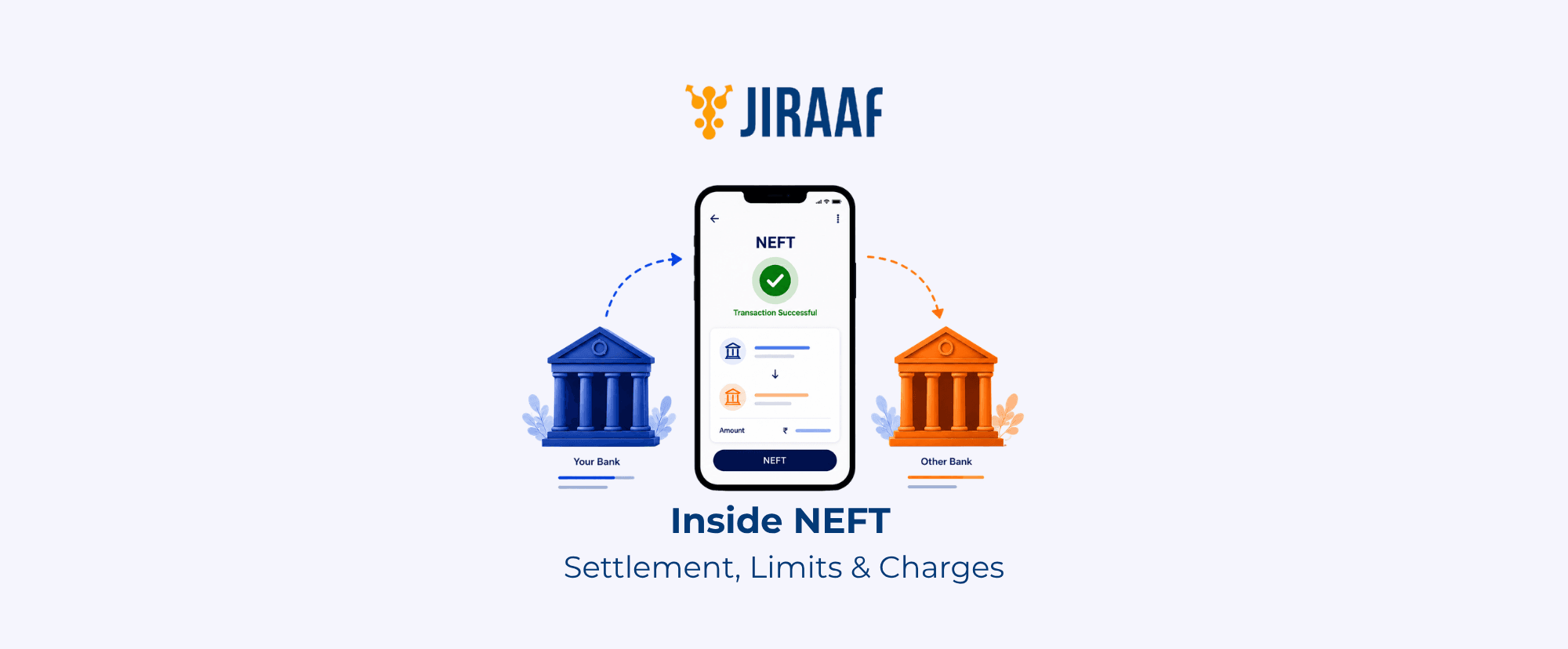
When you make a NEFT transfer, the process may look simple from your side, but several steps happen in the background before the money reaches the receiver. Here is how your payment moves from your bank account to the beneficiary’s account.
You Initiate the Transfer
The process starts when you submit a NEFT request through your bank’s internet banking service, mobile banking app, or by visiting a bank branch.
You provide the required beneficiary details, such as the account holder’s name, account number, and IFSC code. After checking the information and confirming the transaction, your bank begins processing the request.
The Transaction Moves into the NEFT System
Once your bank accepts the request, the transaction is sent to the NEFT clearing system. It is placed in the next available half-hourly settlement batch along with other NEFT transactions submitted by different banks.
The Payment Gets Settled
The RBI’s clearing system processes the transactions received from participating banks. The payments are settled through the NEFT mechanism, ensuring that the correct amount is transferred between the sender’s and receiver’s banks.
The Beneficiary Receives the Funds
After settlement, the beneficiary’s bank receives the payment details and credits the amount to the receiver’s account. RBI mandates that destination banks must credit the beneficiary’s account or return the funds (if uncredited) to the originating bank within two hours of the batch settlement, the whole process usually wraps up quickly. Once the money is successfully credited, most banks send a confirmation through SMS, email, or mobile app notifications.
What to Know Before Making an NEFT Transfer?
Before sending money through NEFT, it helps to understand a few practical details such as transfer timing, limits, and possible charges. Knowing these factors can help you plan your payments better and avoid unexpected delays.
NEFT Transfer Time & Settlement
NEFT is available 24×7, including weekends and bank holidays. You can initiate a transfer at any time through internet banking, mobile banking, or a bank branch.
However, NEFT transfers are not always completed instantly. Unlike real-time payment systems, NEFT transactions are processed in half-hourly settlement batches throughout the day. Once your transaction enters the next available batch, it moves through settlement before the beneficiary’s bank credits the amount, generally within two hours.
The actual time taken for a NEFT transfer can vary depending on factors such as:
- The time you initiate the transaction
- The next available settlement batch
- Processing time at the beneficiary’s bank
- Technical issues or bank-side delays
If you’re funding an investment or meeting an application deadline, try avoiding initiating the transfer right before the cut-off. NEFT operates 24×7, but settlement batching and the receiving bank’s own processing can still add a short delay, and that gap matters more when a deadline is on the line.
NEFT Limits
NEFT does not have a minimum transfer amount set by the RBI, which means you can send even a small amount through the system.
There is also no maximum transaction limit prescribed by the RBI for NEFT transfers from regular bank accounts (except for cash-based walk-in transactions, which are capped at ₹50,000 per transaction). However, individual banks may set their own daily limits based on factors such as:
- Type of account
- Customer profile
- Banking channel used (mobile banking, internet banking, or branch)
Some banks may also apply restrictions on transfers to newly added beneficiaries for security reasons. These limits are usually temporary and vary from bank to bank.
Bank-specific NEFT limits can become relevant for large transfers.
NEFT Charges
Receiving money through NEFT is free. As mandated by the RBI, online NEFT transfers initiated from savings accounts via internet banking or mobile banking are strictly free of cost for all customers.
For branch-based NEFT transactions, banks may charge a fee within the limits prescribed by the RBI (capped between ₹2.50 and ₹25, depending on the transaction slab, plus applicable GST). However, many banks waive or reduce these charges depending on the type of account and their service policies.
Before making a transfer through a branch, check your bank’s latest fee structure to understand any applicable charges.
How to Make an NEFT Transfer Safely
Making an NEFT transfer is a simple process. You can send money through your bank’s digital platforms or by visiting a branch, depending on what is convenient for you.
Choose Your Transfer Method
You can initiate an NEFT transfer through:
- Internet banking: Log in to your bank’s website, add the beneficiary details, enter the amount, and confirm the transaction
- Mobile banking: Use your bank’s official mobile app to transfer funds directly from your account
- Bank branch: You can also visit your bank branch and submit an NEFT request form if you prefer offline banking
Details Required for an NEFT Transfer
A typical NEFT transfer requires the following beneficiary details:
- Beneficiary name
- Bank account number
- IFSC code
After entering the details, consider reviewing them carefully before approving the payment. Once confirmed, your bank processes the request and sends it through the NEFT system.
Common NEFT Transfer Issues and How to Avoid Them
Although NEFT is a reliable way to transfer money, some transactions may face delays due to incorrect details, security checks, or technical issues.
Common Reasons for Delays
- Incorrect account number or IFSC code: Wrong beneficiary details can cause the transaction to fail or delay processing
- New beneficiary verification: Some banks apply temporary restrictions or additional checks when you add a new beneficiary
- Additional fraud checks: Unusual transactions, large payments, or changes in regular payment patterns may require extra verification
- Technical or network issues: Bank server problems, maintenance activities, or connectivity issues can sometimes slow down processing
Tips to Make NEFT Transfers Safer
To ensure a smooth transfer:
- Double-check the beneficiary’s account number and IFSC code before confirming
- Use only your bank’s official website or mobile app
- Banks do not ask customers to share OTPs, PINs, or banking passwords
- The transaction reference number helps banks trace a payment if an issue arises
NEFT vs UPI vs RTGS vs IMPS: Which Payment Method Should You Choose?
With multiple digital payment options available today, choosing the right one depends on how quickly you need the money transferred and the type of payment you are making.
| Feature | NEFT | UPI | RTGS | IMPS |
| Settlement | Batch-based | Instant | Real-time | Instant |
| Availability | 24×7 | 24×7 | 24×7 | 24×7 |
| Best for | Planned bank transfers | Everyday payments | High-value urgent transfers | Immediate bank transfers |
| Transaction style | Bank-to-bank | Mobile-first | Large-value banking | Immediate account transfer |
| Banking trail | Strong | Moderate | Strong | Strong |
| Limits | No RBI upper limit | Typically up to ₹1 lakh/day | Minimum ₹2 lakh requirement; no upper limit | Up to ₹5 lakh/day |
| When to choose | When you need a reliable bank transfer with proper documentation and a strong banking record. It is commonly used for planned transfers, investment funding, salary payments, and business transactions | When you need quick payments for daily expenses like shopping, bills, or small transfers | When you are making high-value transactions (minimum ₹2 lakh) where real-time settlement is important | When you need to transfer money immediately from one bank account to another |
Conclusion
NEFT isn’t designed for instant payments. It’s designed for certainty at scale. There’s no RBI-imposed transaction limit on transactions done through NEFT, although your bank may set its own, and you don’t pay charges for online NEFT transfers from your savings bank account.
Amount settlement runs on a fixed schedule rather than case-by-case processing. That combination is why NEFT remains the default for large or non-urgent payments, salary runs, investment funding, business settlements, where getting the amount right matters more than getting it there instantly.