In a market where volatility often challenges even the most seasoned investors, identifying instruments that offer a balance between both resilience and growth potential is crucial. Convertible bonds are the answer to those seeking a sophisticated blend of fixed income stability and equity comparable growth.
Convertible bonds let you participate in equity growth without taking on the full risk of direct investments, making them a smart investment choice for balancing risks, returns and diversification.
Do convertible bonds fit into your investment strategy?
What are Convertible Bonds?
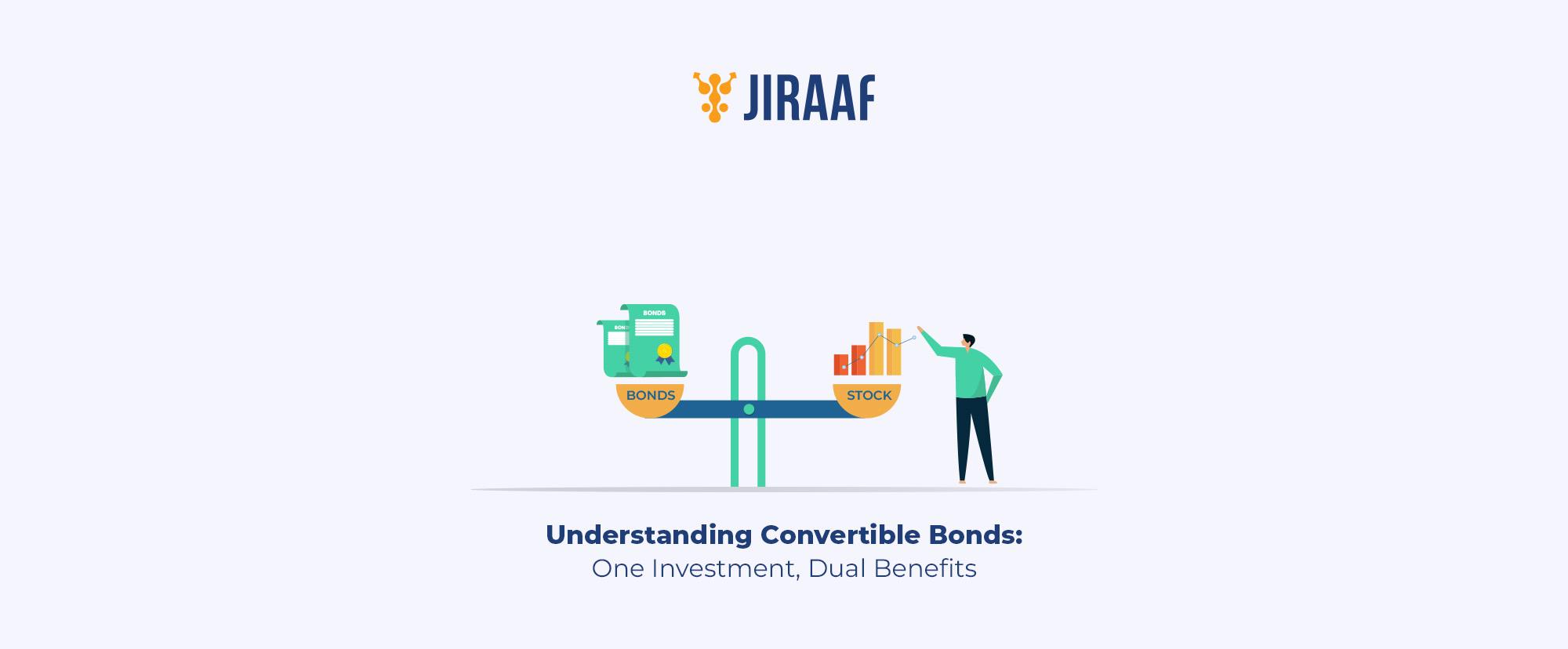
Convertible bonds are a unique financial instrument that combines the features of both – debt and equity. These hybrid securities don’t just yield interest payments but also allow bondholders to convert their bonds into a predetermined number of company shares, offering potential upside if the company’s stock performs well.
How Does a Convertible Bond Work?
Convertible bonds allow investors to convert their bonds into a predetermined number of the company’s shares at a set conversion price, typically higher than the stock price at the time of issuance. Upon issuance, the company pays regular interest (a lower coupon rate than traditional bonds) to the bondholder.
The value of the bond is driven by two key components: its fixed-income value (based on interest payments and principal repayment) and its conversion value, which reflects the potential for conversion into equity if the stock price rises.
The bondholder has the option to convert the bond into shares at any time before maturity. This option adds value, particularly when the stock price increases significantly. For example, if the conversion price is ₹100 and the stock rises to ₹150, the bondholder can convert at ₹100, benefiting from the price appreciation.
Convertible bonds offer flexibility, allowing investors to either collect steady interest or convert to equity if the capital market conditions are favorable. The bond’s price fluctuates based on the underlying stock’s performance, volatility, and time to maturity, with longer durations providing more upside potential.
When Can Bondholders Convert Their Bonds?
The conversion timing is governed by the bond’s terms, which specify a conversion period, often beginning after an initial lock-in phase and continuing until the bond’s maturity date. Some bonds may include triggers, such as stock price thresholds, that activate the conversion option.
Conversion Ratio of Convertible Bonds
The conversion ratio determines how many shares a bondholder will receive upon conversion. It is typically fixed at issuance and calculated as:
Conversion Ratio = Par Value of the Bond / Conversion Price
For instance, if a bond has a par value of ₹10,000 and a conversion price of ₹500, the holder will receive 20 shares (₹10,000/₹500).
Types of Convertible Bonds
Let’s explore some major types of convertible bonds and what sets them apart.
1. Regular Convertible Bonds
These bonds allow holders to convert them into equity at any point during the conversion period, offering great flexibility. Bondholders can choose the best time to convert based on market conditions.
2. Mandatory Convertible Bonds
Holders of these bonds must convert them into equity at maturity, regardless of how the stock is performing at that time. This type can be beneficial if the underlying stock appreciates significantly.
3. Reverse Convertible Bonds
In the case of reverse convertible bonds, the issuer has the option to repay the bond’s principal in shares instead of cash. This repayment is often tied to the performance of the stock price, making it a unique investment choice with increased risk and potential reward.
Features of Convertible Bonds
Convertible bonds come with several features that make them a versatile investment option. Here are the key features they offer.
i. Conversion Option
A key feature of convertible bonds is the conversion option, which allows bondholders to convert their bonds into shares. This enables them to benefit from potential stock appreciation.
ii. Interest Payments
Convertible bonds offer regular interest payments that are typically lower than those of traditional bonds, reflecting the value of the embedded equity option.
iii. Maturity Date
These bonds come with a fixed maturity date. By this date, the holder must decide whether to convert the bond into shares or retain it.
iv. Conversion Ratio
The conversion ratio indicates the number of shares a bondholder will receive upon conversion. This ratio plays a significant role in determining the potential value of the equity.
v. Conversion Price
The conversion price is the predetermined price at which the bond can be converted into shares. It is essential for assessing the investment’s potential.
vi. Call and Put Options
Some convertible bonds include call options, allowing the issuer to redeem the bonds early, or put options, which permit the holder to sell the bonds back early. These options add flexibility to the investment.
Examples of Convertible Bonds
Let’s say that an issuer recently sold $1.1 billion of convertible bonds to buy back outstanding notes.
Issuer: XYZ industries
Amount Raised: $1.25 billion (approximately ₹10,375 crores)
Conversion Price: Approximately $370.77 per share (55% premium to the stock price at the time, equivalent to ₹30,532 per share)
Date: May 19, 2021
This bond allows holders to convert their investment into the company’s stock at the specified conversion price if the stock performs well, providing potential equity upside.
For the issuer, this offering offers lower-cost debt financing than traditional bonds, while maintaining flexibility for future acquisitions or debt reduction. Investors benefit from fixed interest payments with the added potential to participate in the company’s equity growth, though with the risk of stock price fluctuations.
Note: The INR conversion is based on an exchange rate of approximately 1 USD = 83 INR at the time of writing.
Benefits of Convertible Bonds
Below are some key benefits of investing in convertible bonds:
- Risk Mitigation: Convertible bonds offer a cushion against downside risks compared to direct equity investments. If the stock prices of the issuing company fall, investors still receive the fixed interest and principal repayment, limiting potential losses. This makes convertibles a safer option than pure equity investments.
- Equity Market Growth: One of the key benefits of convertible bonds is their ability to capitalize on rising stock prices. If the issuing company performs well, investors can convert their bonds into equity shares, potentially reaping significant gains from stock price appreciation. This upside potential adds a growth component to the investment.
- Tax Advantages: In some jurisdictions, convertible bonds may qualify for favorable tax treatment. Interest income might be taxed at low rates compared to other income sources, or capital gains from equity conversion may enjoy tax benefits. Depending on local tax regulations, this can enhance the overall return on investment.
Disadvantages of Convertible Bonds
While convertible bonds offer unique benefits, they also come with certain drawbacks that investors should consider. Here are the key disadvantages to keep in mind.
- Low Fixed Interest Rates: Convertible bonds typically offer low interest rates compared to traditional non-convertible bonds. This trade-off exists because the conversion feature provides investors with the potential for equity gains if the underlying stock performs well, compensating for the reduced fixed income returns.
- Exposure to Market Risk: Convertible bonds are linked to the performance of the underlying stock. This means that if the stock price declines, the bond’s value may also decrease, exposing investors to potential market volatility.
- Risk of Shareholder Dilution: Converting bonds into equity increases the total number of outstanding shares. This process can dilute existing shareholders’ ownership stakes and earnings per share, which may impact their returns.
- Challenges in Valuation: Convertible bonds require a deeper understanding of fixed-income and equity valuation. Their hybrid structure introduces complexity, making them harder to analyze and assess compared to standard bonds or stocks.
Comparing Convertible Bonds and Traditional Bonds
Each type serves different investment goals, ranging from safety and stability to potential high returns. Here’s a quick comparison to help you choose the right one.
| Parameter | Convertible Bonds | Corporate Bonds | Government Bonds |
| Definition | Bonds issued by companies that can be converted into equity shares of the issuing company at a pre-specified rate or time | Bonds issued by private or public corporations to raise capital for business operations or expansion | Bonds issued by the government to fund public projects or manage fiscal deficits |
| Interest Rates | Typically offer lower interest rates compared to standard corporate bonds due to the conversion feature | Generally higher interest rates compared to government bonds to compensate for higher risk | Offer lower interest rates compared to corporate bonds, reflecting the lower risk associated with government backing |
| Risk | Moderate risk: Credit risk depends on the issuing company, and market risk arises from fluctuating equity prices | Higher risk than government bonds: Subject to default risk, credit risk, and market volatility | Low risk: Backed by the government, hence very low credit risk but may carry inflation or interest rate risk |
| Returns | Moderate returns: Potential for equity-like upside if converted, but interest income is lower | Higher returns than government bonds due to higher interest rates but depend on credit quality and market conditions | Stable but lower returns, primarily from interest payments, suitable for long-term stability |
| Liquidity | Moderate liquidity: Liquidity depends on the bond market and investor interest in conversion potential | Liquidity varies widely: High liquidity in bonds from reputed corporations; low liquidity in bonds from less-known issuers | High liquidity: Actively traded in the secondary market, especially treasury bonds |
| Who Should Invest | Investors with a moderate risk appetite, seeking both fixed income and potential capital growth via equity conversion | Investors seeking diversification and relatively higher returns, willing to accept moderate risk levels | Risk-averse investors prioritizing safety, regular income, and stability, such as retirees or conservative investors |
How to Evaluate Convertible Bonds Before Investing
Here are some of the important aspects to evaluate:
- Key Metrics: Assess conversion price, premium, and yield
- Credit Risk: Evaluate the issuer’s financial stability and credit rating
- Tools and Resources: Use bond evaluation platforms, bond directories, financial advisors, and market reports to make informed decisions
Closing Perspective about Convertible Bonds
In conclusion, convertible bonds represent a strategic investment opportunity that merges the benefits of fixed-income securities with the potential for capital appreciation through equity conversion. Their hybrid nature allows investors to diversify their portfolios while offering security through regular interest payments. Key considerations such as the conversion price, issuer credit risk, and overall market conditions are vital in evaluating these instruments.
While convertible bonds have certain drawbacks—such as lower fixed interest rates and exposure to market volatility—they also provide a unique way to gain exposure to potential equity upside without fully committing to stock investments. Convertible bonds can be an effective tool for investors looking to balance stability and growth in their investment strategy. By carefully assessing their financial goals and risk tolerance, investors can determine if convertible bonds fit their investment portfolio.
Frequently Asked Questions
Why Would a Company Issue Convertible Bonds?
Companies issue convertible bonds to raise capital at low interest rates while offering comparable returns to equity.
Do Convertible Bonds Have Higher Yields
Convertible bonds typically have lower yields than traditional bonds due to the equity conversion feature.
Where to Buy Convertible Bonds
Convertible bonds can be purchased through brokers, investment platforms, or directly from the issuer during offerings.
How to Buy Convertible Bonds
Investors can buy convertible bonds via brokerage accounts. Evaluate the bond’s terms, issuer’s credibility, and market conditions before investing.
Discover fixed income investments with Jiraaf, a SEBI registered online bonds platform that educates and brings access to a wide array of bonds. Sign up today to explore diversified fixed income investment opportunities to support your goal-based wealth creation journey. Start investing!