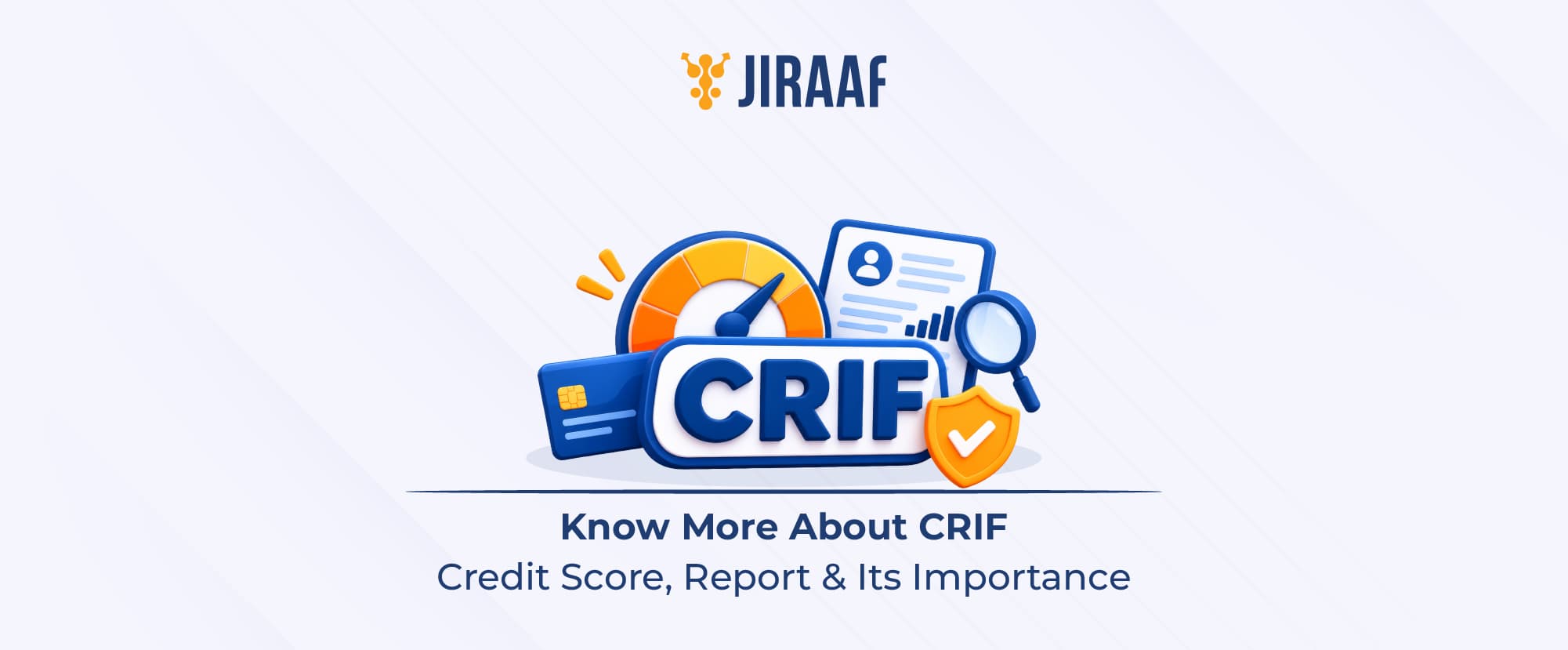
CRIF is a credit information bureau in India that collects and analyzes borrowers’ credit data to generate credit scores and reports. It helps lenders assess creditworthiness and enables individuals to review their borrowing and repayment history.
When it comes to credit scores in India, CIBIL is usually the first name that comes to mind for most people. But it isn’t the only credit bureau lenders rely on. Banks, NBFCs, and microfinance institutions also use CRIF to assess a borrower’s credit history before approving loans or credit cards.
This guide covers everything from checking your CRIF score and downloading your credit report to understanding how CRIF compares with CIBIL.
Understanding CRIF and Its Role as a Credit Bureau
The full form of CRIF stands for Credit Rating Information Services of India Limited. Formerly known as CRIF High Mark Credit Information Services Pvt. Ltd. It is one of the four RBI-licensed Credit Information Companies (CICs), alongside TransUnion CIBIL, Experian, and Equifax.
CRIF offers a range of credit services to lenders, businesses, and individuals. It collects, maintains, and analyzes credit and repayment data from banks, NBFCs, and housing finance companies to generate individual credit scores ranging from 300 to 900. It also provides commercial credit reports for businesses.
These scores aim to quantify the likelihood of an individual or business defaulting on its credit obligations, helping lenders assess credit risk.
What Information Does a CRIF Credit Report Contain?
The report that CRIF makes after analyzing credit and repayment data and assigning a score is known as a CRIF credit report. It contains the following details.
- Personal information: Contains identifying details such as name, PAN, date of birth, contact details, and addresses recorded by lenders.
- CRIF credit score: Reflects an individual’s creditworthiness based on their credit and repayment behavior.
- Account summary: Provides an overview of active and closed loans, outstanding balances, and credit limits.
- Credit inquiries: Lists inquiries made by lenders over the past 24 months, helping individuals track credit applications made in their name.
- Lender remarks: Includes comments on settlements, defaults, restructuring, or disputed accounts.
- Appendix: Explains the codes, symbols, and payment indicators used throughout the report to help interpret credit account details and repayment records.
A CRIF credit report offers a detailed view of an individual’s credit history, but the credit score provides a quick measure of their overall creditworthiness. Understanding how this score is categorized helps interpret where an individual stands from a lender’s perspective.
What Is a Good CRIF Score?
A CRIF credit score ranges from 300 to 900 and is divided into five distinct categories to help lenders evaluate an individual’s creditworthiness.
- 300 to 549 (Bad): Indicates high credit risk and a history of defaults, leading to frequent loan rejections.
- 550 to 649 (Poor): Reflects irregular repayments or high debt, limiting an individual’s borrowing options to secured loans or higher interest rates.
- 650 to 699 (Fair): Shows an average credit profile where lenders may approve applications after stricter checks.
- 700 to 749 (Good): Considered a good CRIF score that signals responsible credit behavior and unlocks smooth approvals with competitive terms.
- 750 to 900 (Excellent): Represents peak creditworthiness, qualifying you for the lowest interest rates and pre-approved offers.
A CRIF score between 700 and 749 is generally considered good, reflecting a credit profile that lenders may view favorably when assessing loan or credit card applications.
How to Check Your CRIF High Mark Credit Report?
Individuals can access their CRIF credit score and download their full Credit Information Report (CIR) through the official CRIF consumer portal. Although the company has changed its legal name to CRIF Credit Information Services Pvt. Ltd., its official website continues to operate under the same domain, crifhighmark.com.
The following steps explain how to access and download the report.
Step-by-Step Process to Download the CRIF Credit Report
Step 1: Visit the CRIF’s official website
Individuals can visit crifhighmark.com and select the “Free Credit Score” option to access their credit report.
Step 2: Select the free annual credit report
Under the “Personal Credit Score” section, individuals can select the “Free Annual Credit Report” option. Paid plans are also available for those who require more frequent access to their credit reports.
Step 3: Enter personal and identification details
The registration form requires details such as full name, identification proof (PAN, Passport, or Voter ID), registered mobile number, and email address. Individuals must accept the terms and conditions to proceed.
Step 4: Complete identity verification
Individuals must verify their mobile number or email address using the OTP sent by CRIF. The portal may also ask credit-related security questions, such as details of an existing loan, credit limit, or EMI, to confirm their identity.
Step 5: View the CRIF credit score
Once verification is complete, the dashboard displays the CRIF credit score, generally ranging from 300 to 900, along with the individual’s credit profile and report details.
Step 6: Download the full credit report
Individuals can navigate to My Report → Latest Report → Download to download their full CIR in PDF format.
Step 7: Open the password-protected PDF
The downloaded report may be password-protected. The password format specified for the report is the first four letters of the registered name followed by the last four digits of the registered mobile number.
Checking a CRIF report helps individuals understand how lenders may view their credit history. However, lenders may also refer to CIBIL scores when assessing credit applications. Comparing the two offers a better understanding of how credit bureaus differ in their assessment and influence on lending decisions.
CRIF vs CIBIL: Key Differences
CRIF and CIBIL are both RBI-licensed credit bureaus in India, but they differ in several key aspects, including their scoring models, report features, and market presence.
| Parameter | CRIF High Mark Score | CIBIL Credit Score |
| Market Focus | Strong presence across microfinance, NBFCs, and diverse lending segments | Widely established across India’s retail lending and traditional banking ecosystem |
| Credit Data Coverage | Covers borrowers across banks, NBFCs, microfinance institutions, and other lending segments | Relies on credit data reported by banks, NBFCs, and other credit institutions |
| Scoring Factors | Evaluates repayment history, credit utilization, credit history length, credit mix, and existing credit obligations | Considers repayment history, credit utilization, credit mix, credit history, and recent credit enquiries |
| Lender Usage | Used by lenders to assess credit risk across varied borrower segments | Widely used by lenders to evaluate loan and credit card applications |
| Market Presence | Part of a global credit information network with operations across multiple countries | Primarily focused on India’s credit reporting and lending ecosystem |
Conclusion
Regularly monitoring a CRIF credit profile can help individuals stay informed about their creditworthiness and spot discrepancies before they affect future borrowing decisions. Checking one’s own credit report directly through the CRIF portal is considered a soft enquiry and does not affect the credit score, unlike hard enquiries generated when lenders assess credit applications.
A clear understanding of one’s credit standing also makes it easier to evaluate borrowing needs, avoid unnecessary credit applications, and approach lenders with greater confidence.