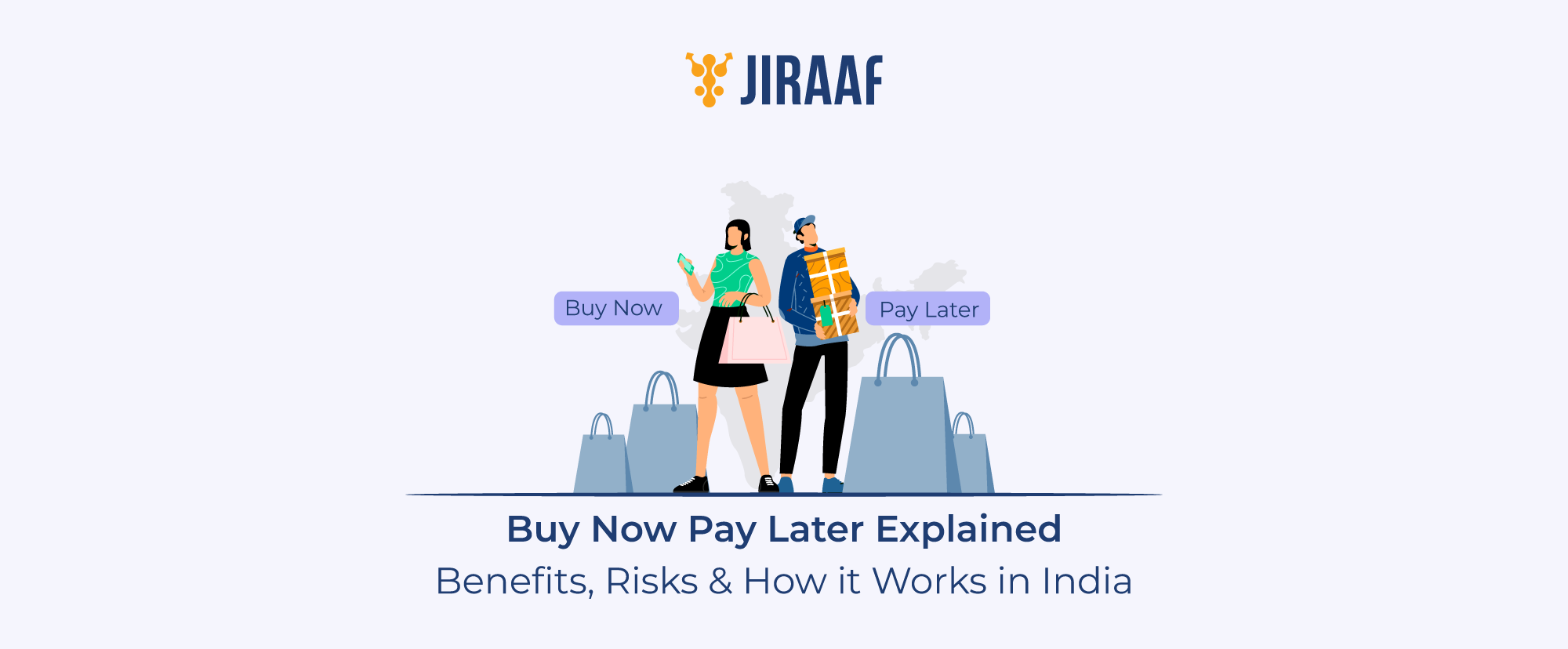
Understand how BNPL works in India, its key benefits, risks, and how it compares with traditional credit cards.
From smartphones and sneakers to food delivery and travel bookings, Buy Now Pay Later (BNPL) has rapidly become one of the most visible payment options across Indian shopping platforms.
For many consumers, this makes expensive purchases feel more affordable and financially manageable. However, this same convenience and sense of affordability can also make it easier for some consumers to fall into a debt trap, where missed repayments, hidden charges, and excessive spending gradually turn short-term convenience into long-term financial stress.
In this blog, we will understand how BNPL works, its advantages, risks, and how it compares with traditional credit cards.
What is Buy Now Pay Later (BNPL)?
Buy now pay later is a type of short-term, unsecured consumer financing that allows shoppers to purchase products immediately and pay for them later in smaller installments over a fixed period. In India, BNPL services are most commonly offered through e-commerce platforms, shopping apps, fintech companies, and digital payment providers.
BNPL is generally classified as point-of-sale (POS) financing. This means the credit is generated directly at checkout during a purchase, rather than requiring the consumer to arrange a traditional loan or credit card in advance. The approval process is usually faster and more integrated into the shopping experience itself.
Unlike traditional loans, many BNPL providers offer short repayment windows with zero-interest structures, especially for smaller purchases. Some platforms may still charge processing fees, late payment penalties, or interest depending on the repayment of tenure and provider terms.
In India, BNPL offerings are broadly structured into two categories:
- Short-cycle BNPL
These are usually short-term credit structures ranging from 14 to 30 days, often offered at 0% interest if the repayment is made within the billing cycle.
- BNPL EMI plans
These are short-term credit structures typically ranging from 3 to 24 months. While some offer “No-cost EMI”, these plans often involve interest rates or processing fees, especially for high-value purchases like electronics or furniture.
Eligibility for BNPL in India
While eligibility requirements can differ across platforms, most BNPL providers in India generally require users to:
- Be an Indian resident with access to BNPL services in supported cities or regions
- Be at least 18 years old, although the upper age limit may vary depending on the provider
- Have a stable source of income, an active bank account, and completed re-mandated Digital KYC or Video-KYC
Additionally, understanding the structure of BNPL becomes important because the actual borrowing and repayment process works very differently from traditional credit products and is deeply integrated into the online shopping experience itself.
How Buy Now Pay Later Works in India
Under a BNPL transaction, the financing provider initially covers the cost of your purchase. At the same time, you repay the amount later either in a single payment cycle or through smaller installments over a fixed tenure. Depending on the platform and repayment structure, this tenure can range from a few weeks to several months.
In India, consumers generally access BNPL services in two ways:
- Directly through shopping apps, e-commerce platforms, or retailers offering BNPL at checkout
- Through credit card providers or fintech platforms that convert purchases into BNPL-style EMI structures
Once the transaction is complete, the repayment structure depends on the BNPL provider, the purchase amount, and the repayment tenure selected during the transaction. Short-cycle BNPL plans are often offered at 0% interest, while longer EMI-based structures may include interest charges, processing fees, or late payment penalties.
Your borrowing limit, repayment tenure, and applicable charges are generally determined based on factors such as your credit profile, repayment history, spending behavior, and relationship with the provider.
For many consumers, the growing popularity of BNPL stems from the convenience and flexibility it offers, especially for online purchases and high-ticket items.
Key Benefits of Buy Now Pay Later
BNPL platforms have gained significant traction in India because they simplify short-term financing and make purchases feel more financially manageable at checkout. Some of the key benefits include:
- No-cost EMI structures
Many BNPL providers offer zero-interest repayment windows or no-cost EMI options on eligible purchases, reducing the need for large upfront payments.
- Flexible repayment tenures
Consumers can choose between shorter billing cycles or longer EMI-based repayment structures depending on the purchase amount and repayment preference.
- Faster approvals and seamless checkout
BNPL approvals are usually integrated directly into the checkout process, making the borrowing experience significantly faster compared to traditional consumer loans.
However, the same convenience and accessibility that make BNPL attractive can also create financial risks if spending and repayments are not managed carefully.
Risks and Drawbacks of BNPL
Despite its convenience, BNPL still functions as a form of credit and comes with certain financial risks that consumers should understand before using it frequently.
- Can encourage overspending
Since purchases do not require immediate full payment, BNPL can sometimes lead consumers towards impulsive or unnecessary spending beyond their repayment capacity.
- Hidden charges and penalties
While some BNPL plans advertise zero-interest structures, delayed repayments may still attract late fees, processing charges, penalty interest, or additional service costs.
- Potential impact on credit score
Since most BNPL services in India are now reported to credit bureaus (like CIBIL) as personal loans or consumer durable loans, any missed payments, delayed EMIs, or excessive borrowing through BNPL platforms can negatively affect an individual’s credit profile and future borrowing eligibility.
This is why BNPL is often compared with traditional credit cards, since both products offer short-term borrowing but operate very differently in terms of repayment structure, accessibility, and usage behavior.
BNPL vs Credit Card
| Basis of Difference | BNPL | Credit Cards |
| Approval and onboarding | Approvals are usually faster and integrated directly into the checkout process with minimal documentation | Requires a more detailed credit evaluation, income verification, and formal application process |
| Usage structure | Primarily transaction-based financing offered during specific purchases on partner platforms or merchants | Provide a revolving credit limit that can be used across multiple online and offline transactions |
| Repayment model | Repayments are usually structured into fixed short-cycle payments or predefined EMI tenures | Offer more flexible repayment structures, including minimum due payments, full bill payments, and EMI conversion options |
| Charges and interest structure | Many plans offer short-term zero-interest repayment windows, although late fees and processing charges may still apply | Can carry higher revolving interest charges if outstanding dues are not paid within the billing cycle |
| Consumer usage behavior | Commonly used for smaller online purchases, shopping transactions, and short-term affordability management | Used more broadly for recurring spending, travel, rewards programs, cashback benefits, and long-term credit building |
Final Thoughts: Is BNPL the Future of Digital Lending in India?
The rapid growth of BNPL highlights how digital lending in India is evolving towards faster approvals and frictionless borrowing. This convenience has also contributed to increased digital spending and to supporting India’s expanding online commerce ecosystem.
However, the same ease of access can also encourage impulsive spending and repeated borrowing if repayments are not managed carefully. BNPL can be a useful financial tool when used responsibly, but overreliance on short-term credit can gradually create long-term financial stress for consumers.