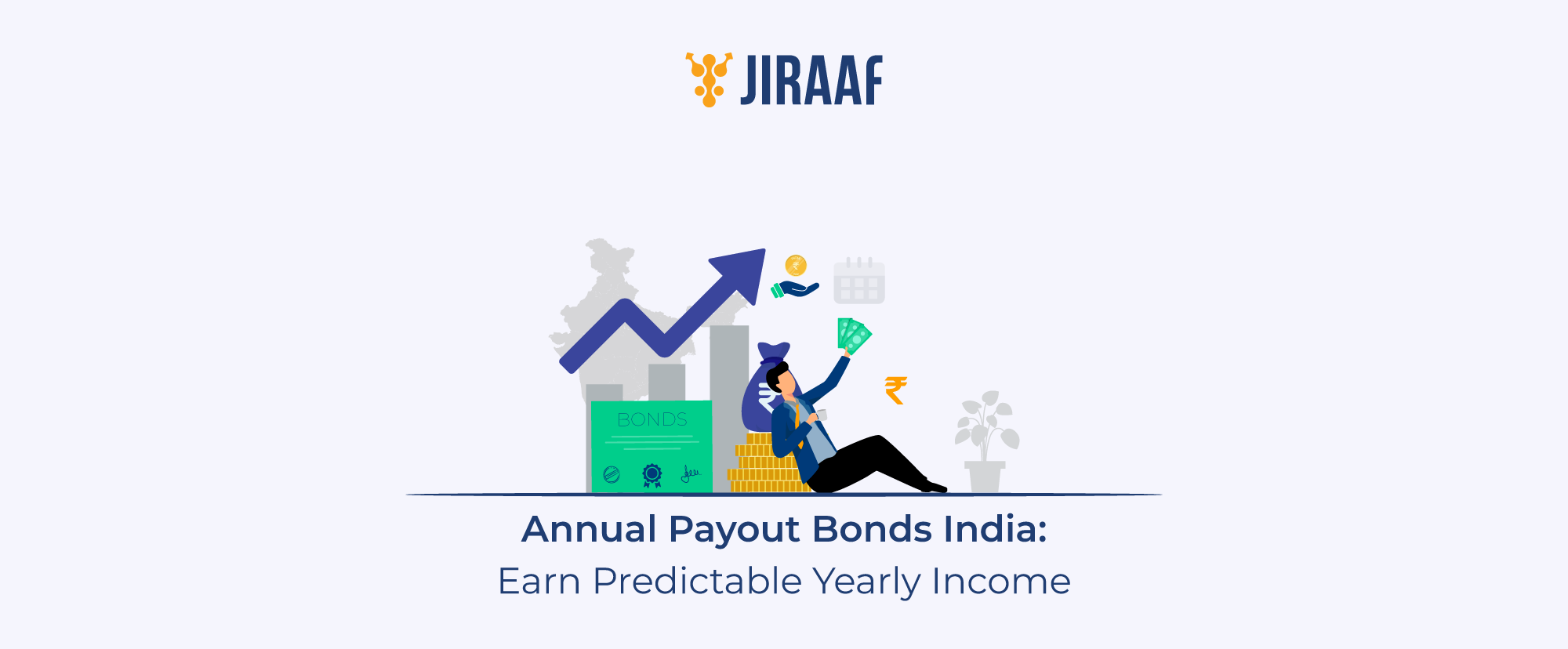
Bonds providing annual payouts offer predictable income, helping you align returns with your financial goals. Learn how they work and where they fit in your overall investment strategy.
Most major expenses tend to come up once or twice a year. But your investments don’t always support the same expenditure pattern. You either receive frequent payouts that are hard to reinvest efficiently, or your money stays locked in without generating income when you actually need it.
This gap is where annual coupon-paying bonds become relevant. In this blog, we break down how they work and how you can use them more effectively within your portfolio.
Why Investors May Consider Annual Interest Payout Bonds
Annual interest payout bonds are fixed-income instruments that pay their coupon once every year. These bonds can be issued by governments, public sector undertakings (PSUs), financial institutions, and corporates, depending on their funding needs and credit profile.
Many investors prefer these bonds because the structure of returns aligns well with how certain financial needs arise. A lump sum payout each year can be more practical than frequent smaller payments, especially when expenses are periodic in nature. For instance, commitments such as your children’s school fees or insurance premiums are typically annual, making it easier to match these outflows with a corresponding inflow.
This approach also brings clarity to financial planning. Since the timing and amount of income are known in advance, it becomes easier to plan both expenses and reinvestment decisions without disturbing long-term investments.
But before you decide whether these bonds fit your needs, it’s important to discuss the unique features of these bonds.
Features of Annual Interest Payout Bonds
Here are the key features that define how annual interest payout bonds work.
1. Defined payout frequency
The bond clearly specifies that interest will be paid once a year, giving you a structured and easy-to-track income schedule.
2. Fixed coupon rate
You earn a predetermined interest rate throughout the bond’s tenure, which brings stability to your expected returns.
3. Long-term investment horizon
These bonds are typically issued with tenures spanning over years, making them suitable if you are investing with a long-term perspective.
While the structure is straightforward, choosing the right bond requires a closer look at a few important details.
Things to Look for While Investing in Annual Interest Payout Bonds
Before you invest, it’s important to consider factors that can directly impact your returns.
1. Credit quality of the issuer
Start with the issuer’s credit rating. A higher-rated bond may offer slightly lower returns, but it gives you greater confidence in receiving both interest and principal on time.
2. Coupon rate vs market rates
Don’t look at the coupon in isolation. Compare it with current market yields to understand whether you are being fairly compensated for the risk you are taking.
3. Tenure and your investment horizon
Check if the bond’s maturity aligns with your goal. For instance, locking money into a long-term bond without a clear plan or goal can create liquidity challenges for you till it matures.
4. Liquidity and exit options
If you plan to exit before maturity, check whether the bond is listed and actively traded, as liquidity can impact the price you receive. Bond prices may move based on interest rate changes, which means you could sell at a premium or a discount. If you sell a listed bond after 1 year, the profit is now taxed as Long-Term Capital Gain at a flat rate of 12.5% without indexation.
5. Tax implications and TDS on interest
Interest earned is typically taxable as per your income slab. Factor this in to understand your actual post-tax return, not just the stated coupon. A 10% Tax Deducted at Source (TDS) now applies to interest on listed corporate bonds under Section 193 if the annual interest exceeds ₹10,000.
Once you’ve evaluated these factors and selected the right bond, the value it adds to your portfolio becomes clearer.
Benefits of Investing in Bonds with Yearly Returns
Here’s how annual payout bonds can support your broader investment approach.
1. Supports goal-based investing
Annual payouts can be aligned with specific financial goals like yearly expenses or planned commitments. This helps you meet those goals without disturbing your core investments.
2. Lower reinvestment stress
With annual payouts, you receive a larger sum at once, which allows you the flexibility to plan and execute reinvestments more effectively. Instead of frequently deploying smaller amounts, you can align reinvestment with market conditions or upcoming financial goals.
3. Better alignment with long-term financial planning
Annual payouts integrate more naturally with yearly financial planning cycles such as reviewing your portfolio, rebalancing allocations, or funding planned expenses. This reduces the need for constant intervention and helps maintain a more structured investment approach.
However, while annual payout bonds offer structured and predictable income, they may not be suitable for every investor or financial situation.
Disadvantages of Annual Interest Payout Bonds
Before investing, it is important to understand the limitations of annual payout bonds and how they may impact your overall portfolio strategy.
1. Limited cash flow flexibility
Since payouts are received only once a year, they may not align with more frequent expense requirements. This can create gaps in cash flow if your financial needs arise on a monthly or quarterly basis.
2. Reinvestment timing risk
Receiving a large payout at once means you may need to reinvest a significant amount at a single point in time. If market conditions are not favorable, this can impact the returns you generate from reinvesting that income.
3. Opportunity cost of idle funds
If you do not immediately redeploy the annual payout, the amount may remain idle for a period of time. This can reduce the overall efficiency of your portfolio, especially when compared to strategies that keep capital continuously invested.
While these limitations exist, the way you structure and manage your investments can significantly influence the outcomes you achieve.
Tips to Maximize Returns from Annual Payout Bonds
Here are a few practical ways to improve outcomes from annual payout bonds
1. Invest in high-credit, higher-yield opportunities
Look for bonds that offer a spread over government securities while still maintaining strong credit ratings. This helps you balance safety with better returns.
2. Time your entry based on interest rate cycles
Bond yields move with interest rates. Investing when rates are relatively higher allows you to lock in better coupons for the long term.
3. Ladder your investments across tenures
Instead of investing all your capital in one bond, you can spread it across different maturities. This helps manage interest rate risk and gives you periodic liquidity.
4. Reinvest annual payouts strategically
It’s smart to not let your annual interest sit idle. Reinvesting it in instruments that align with your goals helps improve your overall portfolio returns over time.
When you combine the right selection with the right approach, annual payout bonds can become a much more effective part of your overall investment strategy.
Conclusion
The market has numerous products for different types of investors and goals. In many cases, a single annual payout bond can be more useful, giving you a meaningful amount to deploy or reinvest at once. They also reduce unnecessary complexity. Instead of dealing with multiple small payouts from a single investment, you receive a consolidated amount that is easier to plan around.
Most importantly, they fit well alongside growth assets. While equity builds long-term wealth, these bonds can handle predictable cash needs without forcing you to sell at the wrong time.