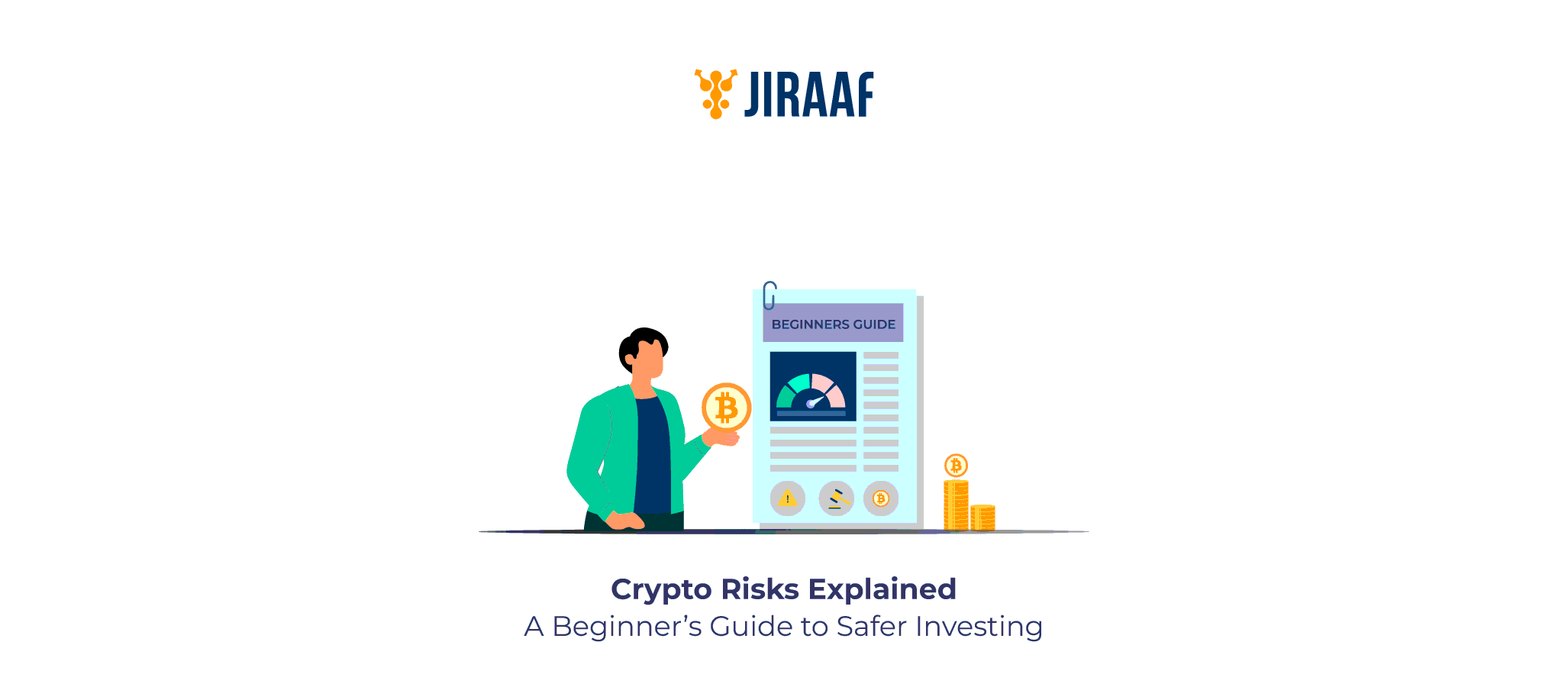
Cryptocurrency investing comes with high volatility, regulatory uncertainty, and security risks, especially for beginners. This guide explains the key crypto risks and practical steps new investors can take to invest more safely and confidently.
Over the last few years, cryptocurrencies have attracted every kind of investor. Some genuinely believe in the long-term future of decentralized digital currencies, while others enter the market hoping to profit every time Bitcoin makes headlines for a price surge.
Despite the growing buzz, cryptocurrency remains one of the least understood asset classes in India. For beginners, this gap in understanding can lead to rushed decisions, unrealistic expectations, and avoidable losses when interacting with the crypto market. The risks are real, but they are frequently overshadowed by online hype, making risk awareness essential before investing.
This guide breaks down those risks and helps you approach crypto investing with greater caution, clarity, and confidence.
Understanding the Risks of Cryptocurrency
In India, uncertainty around cryptocurrency has always remained a trending topic. It was only in the Union Budget 2022–23 that the government formally brought crypto under the tax framework by classifying it as a Virtual Digital Asset (VDA) under the Income Tax Act, 1961. Crucially, this included a flat 30% tax on any income from the transfer of VDAs and a 1% Tax Deducted at Source (TDS) on transactions above a certain threshold, with no provision to set off losses from one coin against gains from another.
This move, combined with the RBI’s consistently cautious stance and strict tax treatment, signals that crypto is viewed as a highly volatile and speculative asset class when compared to traditional asset classes.
Cryptocurrencies operate in a largely unregulated, decentralized environment. A single global event, a government policy change, or even a single influential tweet can move crypto prices drastically. This lack of predictability makes understanding crypto-related risks significant before investing.
Some risks are built into the very nature of crypto, such as:
- No investor protection: If you lose money to any scam or exchange failure, there is no regulator (like SEBI) to turn to.
- Wallet and custody risk: In crypto, ownership depends on who controls the private keys. Using non-custodial wallets means investors are solely responsible for securing their seed phrases, and any loss is irreversible. Keeping funds on an exchange introduces custodial risk, as access depends on the platform’s stability, compliance status, and operational reliability.
- Digital fragility: Being a purely digital asset, it is vulnerable to scams, phishing, or even technical shutdowns.
Once these broader risks are clear, the next step is to understand where they surface in real-world trading and investing scenarios, especially for retail investors.
Significant Risks of Trading Cryptocurrency
When it comes to crypto, risks are not just about market swings. Here are some of the biggest ones:
| Parameters | Key Risks & Considerations |
| Security Issues | – Not all exchanges and platforms are equally safe. Weak infrastructure can expose you to hacking risks. – In India, smaller unverified exchanges have faced downtime or even sudden closures, trapping investor funds. – In a recent development, Crypto exchanges are required to register with the Financial Intelligence Unit (FIU-IND) under the Prevention of Money Laundering Act (PMLA). Using non-compliant offshore exchanges can lead to account restriction and blocked services. |
| Liquidity Risk | – If a coin has low trading volume, you may struggle to exit at the right time, especially in sudden crashes. |
| Extreme Volatility | – It is not uncommon for a cryptocurrency to move double digits in % within hours. |
| Broker and Exchange Risk | – Choosing the wrong broker can lock your funds or give poor liquidity. – In India, many exchanges have faced regulatory scrutiny in the past, leading to panic among traders. |
| Hacks, Scams, and Phishing | – Rug pulling happens often, especially in DeFi (Decentralized Finance); developers abandoning a project after raising money, leaving investors with worthless tokens. – The crypto market is also susceptible to phishing attacks. Fake websites or emails steal your private keys. Once gone, your crypto cannot be recovered. |
| Technical Glitches | – Exchange downtime during heavy trading is common. Imagine not being able to sell during a crash. |
| Competing against Whales and Algorithms | – The crypto market is dominated by whales, bots, and algorithmic traders. Retail investors often end up reacting late. |
While these risks are part of the crypto ecosystem, many losses do not occur because of market volatility alone. They happen when investors respond poorly to these risks, often due to inexperience or emotional decision-making.
Common Mistakes Investors Make in Crypto
Many risks in crypto cannot be eradicated. But what often hurts beginners is the way they respond to those risks. These common mistakes turn a volatile market into a dangerous gamble:
- Emotional trading
Oftentimes, beginner crypto enthusiasts end up buying a shady cryptocurrency because of online hype, FOMO, or selling an undervalued cryptocurrency just because a friend told them to.
- Blindly following influencers
Many investors also end up following sponsored or agenda-driven influencers, making them susceptible to pump-and-dump schemes.
- Treating crypto like a casino
A very common mistake beginners often engage in is speculation. While speculation doesn’t necessarily mean gambling, jumping in and out of trades without understanding projects or fundamentals is closer to gambling than investing.
- Ignoring exchange policies
Each platform has its own withdrawal limits, charges, and compliance rules. Not checking these details can trap an investor’s money or delay access during emergencies. In India, this includes understanding how the 1% TDS is deducted from your sell orders.
Since these mistakes are largely preventable, the focus for beginners should shift from chasing returns to managing risk through disciplined investing habits.
Best Practices for Safer Crypto Investing
While cryptocurrencies may seem overwhelming for a beginner, investors can still make meaningful returns from this asset class by developing proper investment habits. Here are a few strategies that may help keep an investor’s journey safer and more disciplined.
- Start small
Many experts suggest not exposing more than 1-5% of a portfolio to cryptocurrencies in one go. So even if an investor experiences a drawdown in their crypto portfolio, they can treat it as a signal to pause and re-evaluate instead of chasing losses.
- Control behavioral biases
Knowing when emotional triggers such as excitement or fear begin to influence investment decisions is critical. For example, loss aversion often leads investors to hold on to declining cryptocurrencies in the hope of breaking even, even when fundamentals have weakened. Recognizing such biases can help investors pause, reassess their positions, and make more rational decisions.
- Follow regulations
Sticking with FIU-registered platforms that comply with Indian KYC and tax norms adds a layer of protection and helps investors stay on the right side of the law.
- Build a personal checklist
Before investing, research coins, exchanges, and teams thoroughly. Investors should create a checklist of what makes a project trustworthy instead of following influencers or hype-driven posts.
- Prioritize security
Use cold or hardware wallets for long-term holdings and keep two-factor authentication active (preferably using an app like Google Authenticator rather than SMS). Remember, losing private keys often means losing funds permanently.
With the right habits in place, crypto stops being a game of chance and becomes an asset class that can be approached with clarity and caution.
Conclusion
A safe way to start investing in cryptocurrencies has more to do with cautious decision-making, protecting capital and being mindful of one’s investment decisions. By understanding how crypto works, choosing compliant platforms, prioritizing security, and investing only what you can afford to lock away, crypto becomes less intimidating and more manageable.