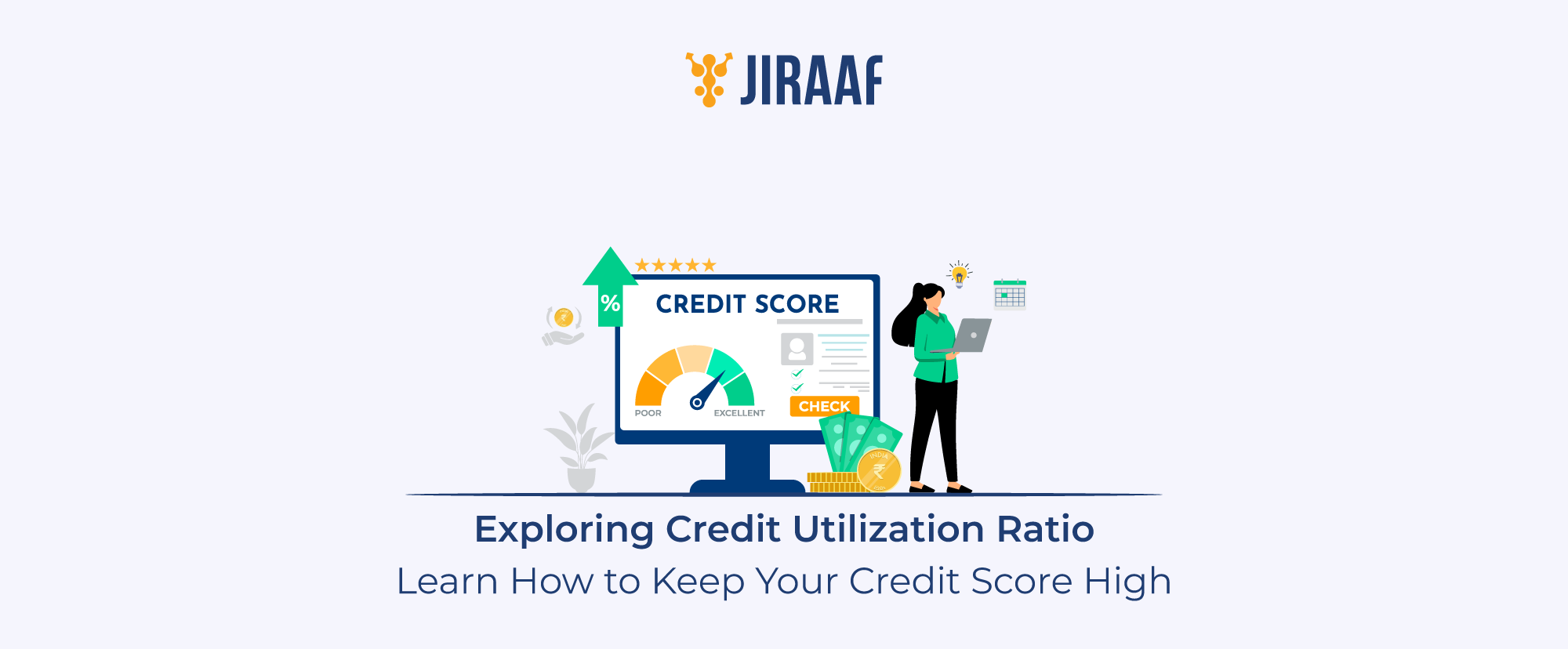
Credit utilization ratio is a silent but essential factor that affects your credit score, and in turn, your borrowing limit in the market. This blog covers what it is, how it is calculated, and what you can do to keep it in that sweet spot.
Your credit utilization ratio is one of the most significant factors affecting your credit score and loan eligibility. Yet, many Indians remain unaware of how this metric works or why it matters so much to lenders. In this blog, we’ll discuss what credit utilization ratio is, how it’s calculated, why it impacts your credit score, and what you can do to maintain a healthy, ideal CUR for better financial opportunities.
What is Credit Utilization Ratio?
Credit utilization ratio (CUR) is the percentage of your available revolving credit that you’re currently using compared to your total credit limits. This applies to all revolving credit accounts (primarily credit cards and lines of credit), but not installment loans, like home loans, car loans, or personal loans.
For example, if you have a credit card with a ₹10,00,000 limit and you’re carrying a balance of ₹2,00,000, your utilization ratio is 20%.
It is calculated using the formula:
[Equation]
This ratio accounts for approximately 25–30% of your total CIBIL score, making it the second most influential factor after payment history.
The mathematics behind credit utilization is simple. It’s the percentage of your available revolving credit that you’re currently using. If you have a credit card with a ₹10,00,000 limit and you’re carrying a balance of ₹2,00,000, your utilization ratio stands at 20%.
In India, this ratio accounts for approximately 25–30% of your total CIBIL score, making it the second most influential factor after payment history.
Why Does Credit Utilization Matter for Your Credit Score
Credit utilization serves as a window into your financial discipline and directly impacts your creditworthiness.
- The “responsible” signal: Low utilization tells lenders you have access to funds but possess the discipline not to over-leverage yourself. It demonstrates financial planning and the ability to manage credit without becoming dependent on it.
- The “risk” signal: High utilization suggests potential financial distress. Even if you pay your bills on time, a high ratio indicates you may be overextended, which increases the perceived risk of default. For lenders, this is a red flag that can result in loan rejections or higher interest rates.
For Indian consumers, this impact is significant. A low credit utilization ratio can mean the difference between securing a home loan at 8.5% versus 9.5% interest; a difference that translates to lakhs of rupees over a 20-year tenure.
What is the Ideal Credit Utilization Ratio?
The ideal credit utilization ratio depends on your credit goals, but lower is always better:
- Below 30%: This is the baseline threshold. Staying under 30% prevents a significant negative impact on your score and is generally considered acceptable credit management.
- Below 10%: People with exceptional credit scores (800 or higher) typically keep their utilization under 10% for each card. If you’re aiming for elite credit status, this could be your target.
- 1-7% (the sweet spot): The average credit utilization among consumers with scores between 800-850 was just 7.1% in 2024. This range demonstrates active, responsible credit use without appearing inactive.
- Why not 0%? A utilization rate of 0% might actually be worse than 1% because credit scoring models need some usage to evaluate your credit habits. Complete inactivity doesn’t prove you can manage credit responsibly; it simply shows you’re not using it. Card issuers may also reduce your limit or close accounts due to inactivity, which would negatively impact your available credit.
Advantages of Using a Credit Card Wisely
When used strategically, credit cards and other revolving credit offer several benefits:
- Credit building: Unlike debit cards, credit cards, and lines of credit report your activity to credit bureaus (CIBIL, Experian, Equifax, etc.), helping you establish and strengthen your credit history; crucial for those who may have limited credit exposure.
- Liquidity management: They provide essential financial flexibility, serving as a safety net for medical emergencies or unexpected expenses without forcing you to liquidate investments at unfavorable times.
- Consumer protection: Credit cards offer superior fraud protection and dispute resolution mechanisms compared to cash or debit transactions. For Indian consumers increasingly shopping online, this protection is invaluable.
- Rewards and benefits: Many cards offer cashback, reward points, travel benefits, and airport lounge access that add tangible value when used responsibly.
How to Maintain Healthy Credit Utilization: Short-term Actions
To optimize your credit utilization quickly, focus on managing the “snapshot” that credit bureaus see when your card issuers report your balances:
- Pay before statement closing date: The balance reported to credit bureaus is typically your statement balance, not what you pay by the due date. Paying your balance before the statement closing date ensures a lower reported utilization, even if you use your cards frequently throughout the month. If your statement closes on the 15th and your due date is the 5th of the following month, pay on the 14th to minimize your reported balance.
- Spread spending across multiple cards: Avoid putting large purchases on a single card, even if your overall utilization is low, as having one card with high utilization can negatively impact your score. Distributing balances across multiple cards keeps per-card utilization low. For example, instead of putting ₹2,00,000 on one card with a ₹5,00,000 limit (40% utilization), split it across three cards to keep each under 15%.
- Monitor both overall and per-card utilization: Credit scoring models consider both your total utilization across all revolving credit accounts and the utilization rate on each individual account. Keeping both metrics below your target threshold would help keep overall utilization in check (ideally under 10%).
- Set balance alerts: You can configure alerts when your balance reaches a specific limit (say ~20% of your limit) on any card. This creates an early warning system, prompting you to make a payment before utilization becomes problematic. Most Indian banks offer real-time SMS and app notifications for this purpose.
Common Pitfalls in Credit Usage
Understanding these common mistakes can help you avoid damaging your credit score:
- Balance transfers and cash advances: While you can transfer money from a credit card through cash advances or balance transfers, these transactions often carry high fees (typically 2.5-3% for balance transfers) and immediate interest charges. More importantly, they spike your utilization instantly and may signal financial stress to lenders.
- The revolving debt trap: Paying only the “minimum amount due” usually triggers high finance charges (often 40%–45% per annum). This keeps your utilization ratio perpetually high as interest compounds daily.
- Closing old cards: Even if you have credit cards you no longer use, keeping them open preserves your available credit limit. Closing an old card removes that limit from your total pool, immediately spiking your utilization ratio. For example, closing a ₹3,00,000 limit card while carrying ₹1,00,000 in balances on other cards could push your utilization from 20% to 40% overnight. The only exception is cards with annual fees you’re unwilling to pay: in that case, paying down balances first before closing is smart.
How to Maintain Healthy Credit Utilization: Long-term Strategies
Building exceptional credit requires systematic habits maintained over years. Here are some proven long-term strategies:
| Strategy | Action | Impact |
| Request limit increases | Asking for a higher limit annually on existing cards if you’ve made on-time payments and won’t increase spending | Naturally lowers the utilization ratio by increasing the denominator; particularly effective after salary increases or debt payoffs |
| Keep old accounts open | Maintaining old, unused cards (unless they have annual fees) | Preserves total available credit; closing accounts immediately spikes your ratio |
| Update income information | Logging in to card portals annually and updating your income details | Banks may proactively increase limits when income rises, but only if their systems reflect current earnings |
| Time payments strategically | Paying before the closing date, not just the due date | Lowers the balance reported to bureaus, improving utilization even if you spend heavily mid-cycle |
| Set up automated alerts | Configuring high balance alerts at 20% of the limit for each card | Acts as an early warning system before utilization becomes problematic |
Important note on limit increases: Credit limit increase requests sometimes lead to a hard inquiry, which might temporarily lower your credit score by a few points. However, the long-term benefit of improved utilization typically outweighs this minor, short-lived dip.
Evolution of credit scoring: Unlike previous credit scoring models, the latest VantageScore 4.0 and FICO 10 T models consider trended data, including your average utilization ratio and credit card balances over time. This means consistent low utilization over months becomes even more valuable than occasional dips to low levels.
How Credit Utilization Affects Credit Scores
The correlation between utilization and credit scores is significant. According to recent data from Experian, consumers with exceptional scores (800-850) maintain an average utilization of approximately 7%, while those in the poorest score range (300-579) average around 80.7% utilization.
Note: A reduction in utilization from 40% to 10% can result in significant score improvements within just 60 days, since balances are typically reported monthly. Unlike payment history, which requires years of consistent on-time payments to repair, utilization can be optimized in a single billing cycle through strategic payments or limit increases.
Final Thoughts
Mastering your credit utilization ratio is one of the fastest ways to improve your credit score and unlock better financial opportunities. By keeping your balances low and your limits high, you signal to lenders that you’re a low-risk, disciplined borrower, which translates into lower interest rates, easier loan approvals, and access to premium credit products.
The strategies outlined here are practical and actionable: pay before statement dates, request limit increases, spread balances across cards, and monitor both overall and per-card utilization. You can start by calculating your current utilization across all revolving credit accounts. If it’s above 30%, prioritize paying down balances before your next statement closes. If it’s already low, request a limit increase to build a cushion for future needs.
Remember, you don’t need to carry debt to build credit. Use your cards regularly, maximize rewards, and maintain excellent utilization by paying strategically. This strategy allows you to build credit history while keeping your score optimized.