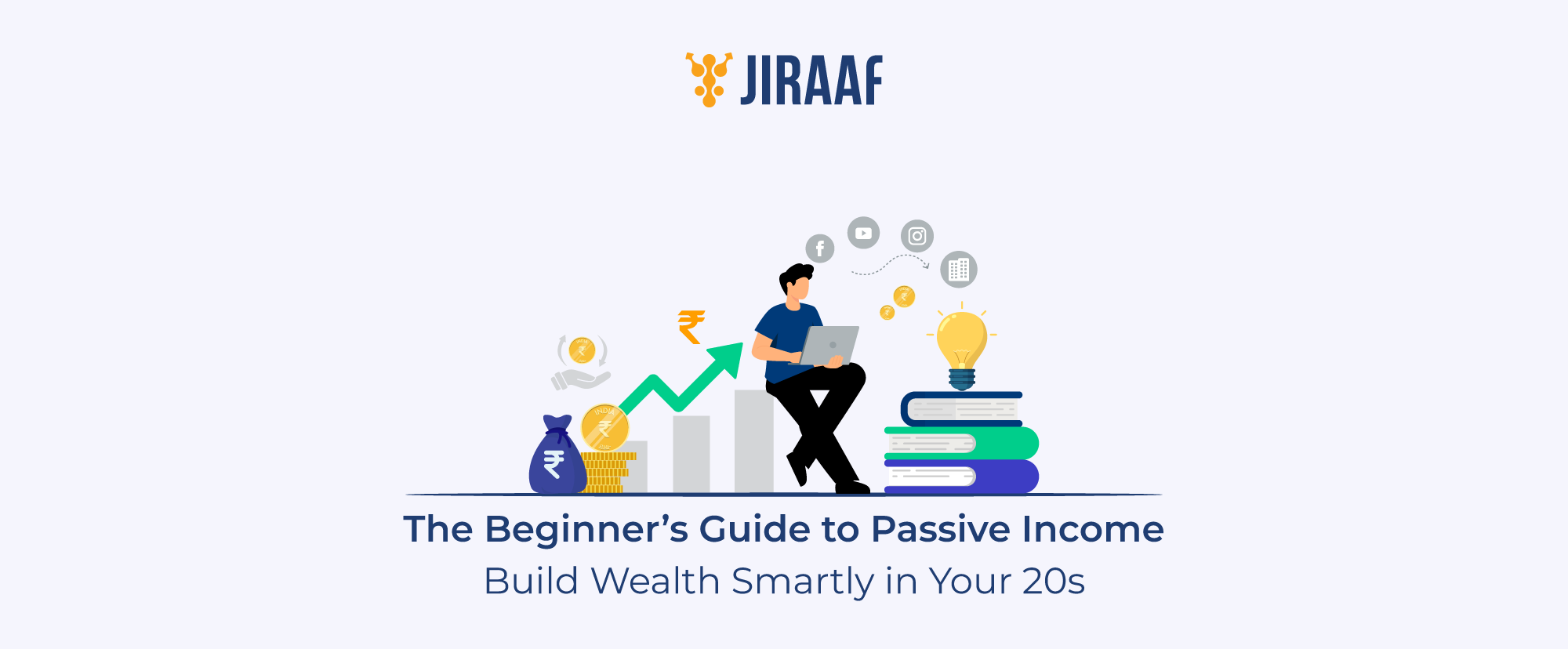
This blog breaks down how young adults can build sustainable wealth through passive income sources and why starting in your 20s gives you a powerful advantage. It also covers practical steps, smart investment options, and key mistakes to avoid on the path to long-term financial independence.
There’s something quietly powerful about earning money even while you sleep. Most people spend their twenties chasing active income, trading hours for paychecks. Yet those who understand the power of passive income start building assets that keep earning for them long after they are done with the initial effort.
In your twenties, time is your greatest advantage. Every rupee you invest today carries the potential to grow for decades. That’s why understanding and building passive income early is a smart financial strategy that sets the stage for long-term freedom and flexibility.
Let’s explore why passive income matters in your twenties, how to start, and the smartest ways to grow your money without being tied to your desk.
Why Passive Income Matters in Your 20s
When you build a passive income source, you create systems that keep generating consistent income without continuous active effort. This helps you focus on building skills, career growth, and achieving personal goals.
Let’s understand what makes it especially important in your twenties.
- Maximizes the power of compounding
Starting early gives your money more years to grow. A small monthly investment in your twenties can outperform a larger investment made later because it has time on its side.
- Accelerates financial independence
When part of your income is passive, you’re no longer fully dependent on a single income source. This freedom helps you take smarter career risks, like switching fields, studying further, or even starting your own business, without worrying about how you’ll pay next month’s bills.
- Provides financial security and stability
Job markets are uncertain, and having an alternate source of income cushions you from sudden shocks, helping you manage emergencies or job transitions without draining your emergency fund.
- Allows for greater risk tolerance and learning
Your twenties are the best time to experiment. You have fewer obligations and more time to recover from mistakes. Passive income ventures, whether investment-based or creative, teach you financial discipline, planning, and patience.
With that in place, the next step is to identify ideas you can realistically begin with.
Best Passive Income Ideas to Explore in Your 20s
Your 20s are the ideal time to experiment with income streams that reward learning, creativity, and consistency.
- Content creation
Content creation lets you convert ideas and perspectives into scalable income. You can earn through ads, brand partnerships, subscriptions, or digital products once you build an audience. The effort is highest upfront, but content keeps working long after it’s published. Because income depends on reach and trust, content creation favors those who are willing to test formats, study audience response, and steadily improve distribution rather than expecting immediate monetization.
- Online courses
Online courses turn a specific, repeatable skill into a one-time asset that sells multiple times. You earn whenever someone enrolls, without having to trade hours for money again. In your 20s, even beginner-level skills have value because learners often want clarity, not expertise. You can use it to your advantage by finding and solving a narrow problem clearly rather than covering everything about a topic.
- Affiliate marketing
Affiliate marketing works when you recommend tools or products you already rely on in your daily work such as software you use, services you’ve tested, or platforms you trust. You earn only when someone acts on that recommendation, which makes credibility your real asset. This way of marketing works best if you have existing reach with audiences through blogs, newsletters, or social content that solves a specific problem.
- Print-on-demand
Print-on-demand allows you to monetize ideas or designs without inventory or logistics. You earn a margin on every sale while platforms handle production and delivery. It suits your 20s because you can experiment with designs and prints quickly and cost effectively. Successful designs can sell repeatedly, while failures typically cost no more than a few hours spent designing and testing an idea.
Each of these ideas combines creativity with digital tools. But creative income streams cover only a single aspect of passive income. You can also earn passive income by investing in financial investments that smooth out your cash flow quietly in the background.
Top Passive Income Instruments to Invest in Your 20s
Passive income can also be built by investing your money in investments that build long-term security.
Bonds
A bond is a fixed-income instrument where you lend money to the government or a company in return for regular interest payments and principal repayment at maturity. Bonds offer a suitable avenue for passive income because of their stable and predictable cash flows.
However, you should focus only on investment-grade bonds, issued by governments or corporates. These bonds are rated within a range from AAA to BBB-, as they carry lower default risk. Including such bonds helps balance portfolios, reduce volatility, and create a steady, dependable income stream over time.
Dividend-focused stocks
Some companies pay a portion of their profits to shareholders as dividends. When you own these stocks, you earn regular income along with your ownership in the company. If you reinvest those dividends instead of withdrawing them, they start generating their own returns, helping your portfolio grow much faster over time.
Peer-to-Peer lending
When you lend small amounts to verified borrowers via regulated P2P platforms (such as those overseen by the RBI in India), you earn interest on the money you provide. Though this involves significant risk as the loans are often unsecured, spreading your loans across different borrowers helps you manage them better. If you do it thoughtfully, P2P lending can offer meaningful returns, beating inflation.
While these instruments lay the foundation, an effective way to build passive income lies in how and when you put them to work. This brings us to the practical steps of building passive income early and doing it the right way.
How to Start Building Passive Income Early
Creating a passive income is about taking structured steps that align with your goals, resources, and time. Let’s break it down into three actionable phases.
Step 1: Get your foundation right
Before chasing returns, secure your basics. Build an emergency fund covering at least six months of essential expenses (or up to twelve months if you are planning to transition to full-time passive income). Pay off high-interest debts, especially credit card balances, and learn to track your spending. A solid foundation ensures your passive income efforts don’t collapse under financial stress.
Step 2: Choose your passive income path
Start with one or two areas you understand and manage. You can also combine a creative stream, like content creation, with an investment route like index funds or mutual funds. The key is doing what interests you and suits your investment style.
Step 3: Create systems for consistency
Automation is the secret behind sustainable passive income. Set up automatic SIPs, schedule regular portfolio reviews, and use productivity systems to manage your creative projects. Once systems are in place, your efforts begin compounding with minimal oversight.
Every small improvement, whether refining your investment mix or improving your content quality, translates into better returns over time.
Tips to Grow and Diversify Your Passive Income Streams
Passive income isn’t a “set it and forget it” concept. It needs periodic care, like pruning a growing tree, so it bears fruit efficiently.
- Reinvest your returns
Instead of withdrawing every profit, reinvest a part of it. Compounding works best when earnings generate their own earnings. Whether it’s reinvesting dividends or profits from content, this cycle accelerates long-term wealth.
- Balance risk and effort
Not all passive income is equally “passive”. Some require creative involvement; others need financial insight. Maintain a mix that suits your time and risk tolerance. If one stream demands more time, offset it with an automated investment route.
- Keep exploring new avenues
The financial landscape keeps evolving. New instruments, technologies, and opportunities emerge every few years. Stay curious. Continuous exploration not only diversifies your portfolio but also strengthens your financial adaptability.
- Review and rebalance periodically
Reviewing your progress helps you see what’s working. Maybe one stream is outperforming while another has stagnated. Rebalancing your investments or revisiting your strategies ensures efficiency and guards against complacency.
When these practices become habits, passive income stops being a side goal and becomes a way of life.
Conclusion
Your twenties give you a rare advantage: time to experiment, learn from your failures, and get clarity for what kind of work or investment actually fits your passive income plan and overall life, so you are not entirely dependent on one skill, one client, or one paycheck.
That said, the right passive income path looks different for everyone. If you are a salaried employee, diversifying your existing investments through relatively stable instruments like corporate bonds can add balance to your overall portfolio. If you freelance, reliable passive income can help cushion slow months so your bills can be paid regularly.
Remember, building passive income early also gives a breathing room to fund your goals like travel, buying a vehicle, or future education plans, without dipping into your emergency savings or disrupting your core finances.