A V-shaped recovery is an economic rebound pattern where GDP, employment, and business activity recover rapidly after a sharp downturn. Understand its meaning, causes and a historical example.
Sometimes, economies take years to recover after a recession, while in other cases, they bounce back surprisingly fast. A V-shaped recovery is one of the quickest rebounds after a recession, in which economic activity sharply declines but rapidly returns to pre-recession levels as the crisis fades.
In this blog, we will explore the meaning, causes, and historical example of a V-shaped recovery.
What is V-Shaped Recovery?

A V-shaped recovery refers to a short recession followed by a rapid and sharp economic rebound that brings the economy back to its pre-recession levels. It signifies rapid realignment in economic activity, driven by investments, consumer demand, and confidence.
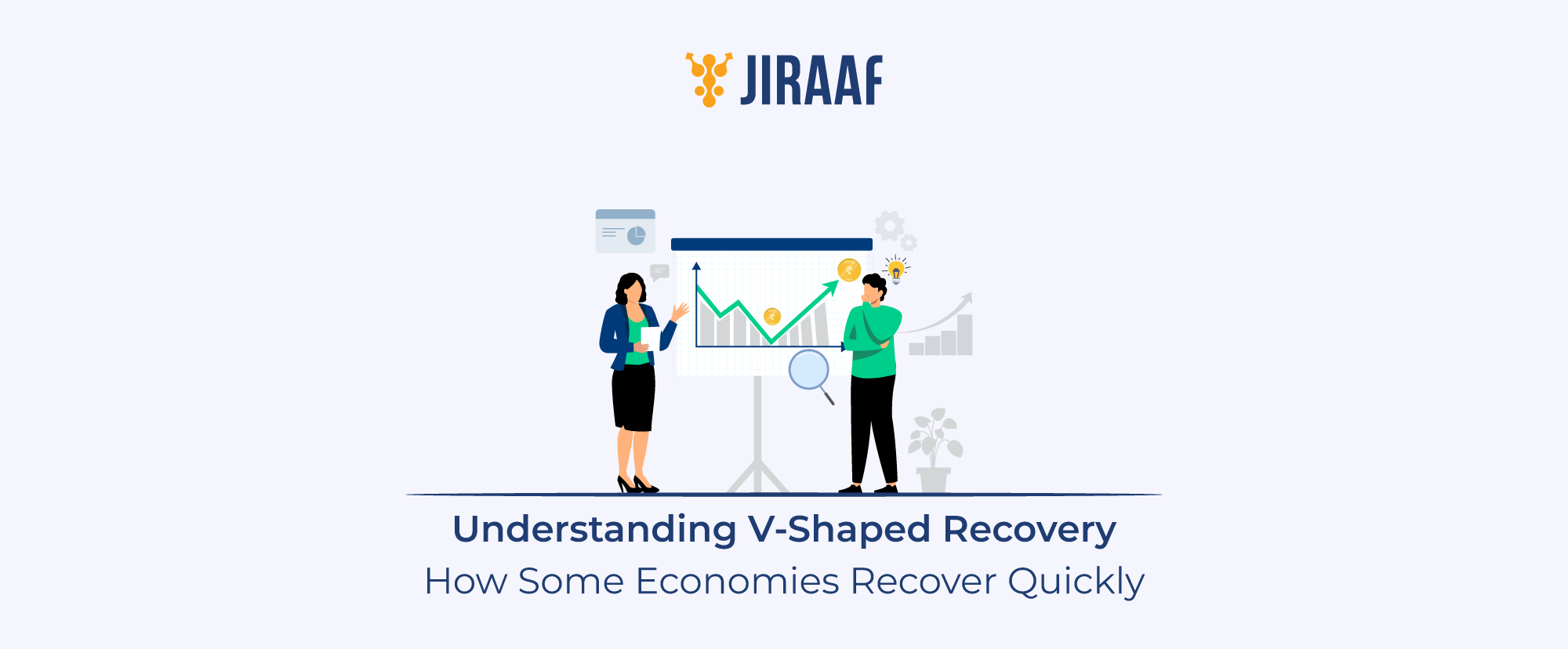
Economists call it a V-shaped recovery because economic activity, when plotted on a graph, shows a steep decline followed by a rapid rebound to pre-recession levels, forming a “V” shape.
Generally, a V-shaped recovery is observed following unpredictable events such as natural disasters, pandemics, and other shocks. Events like these result in sudden GDP fall, high unemployment, and a sharp drop in consumer spending. However, when the event subsides, the economy resumes activity and rebounds sharply, resulting in pre-recessionary growth.
Why V-Shaped Recovery Happens
A V-shaped recovery happens when the economy faces a temporary shock, but its core fundamentals remain strong. Unlike prolonged recessions, businesses, households, and banks are financially stable enough to recover quickly once the crisis eases.
In other words, a V-shaped recovery causes only temporary disruption to economic activity instead of creating long-term structural damage, which is more commonly seen in a U-shaped recovery.
In a V-shaped recovery, swift government intervention and central bank stimulus packages help businesses retain or quickly rehire their workforce, encourage banks to continue lending, and enable consumers to regain confidence quickly as the initial economic shock fades. This allows economic activity to rebound sharply, often bringing GDP, employment, and industrial output back to pre-recession levels within a short period.
Other Recovery Types
Not every economic recovery follows the same path after a recession. Some economies rebound quickly, while others remain weak for years before stabilizing.
- K-shaped recovery
A K-shaped recovery occurs when different sectors or income groups recover at different speeds after a recession, with some growing rapidly while others continue struggling.
- U-shaped recovery
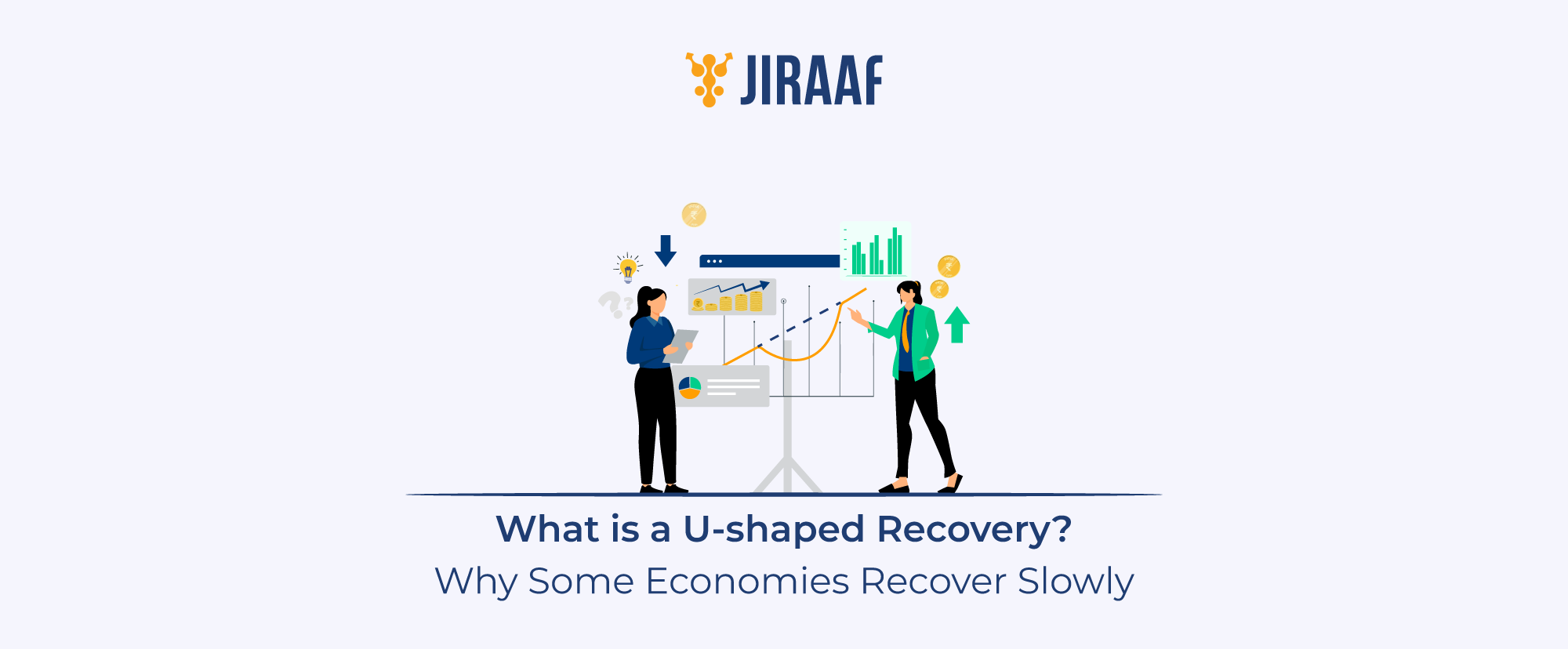
A U-shaped recovery occurs when the economy stays weak for a prolonged period before gradually returning to growth. Recovery in jobs, spending, and investments happen slowly over time.
- W-shaped recovery
A W-shaped recovery, or double-dip recession, occurs when the economy starts recovering after a downturn but then falls back into another recession before stabilizing again.
- L-shaped recovery
An L-shaped recovery occurs when the economy declines sharply and takes several years to recover, leading to prolonged stagnation and weak economic activity.
Among these recovery patterns, the V-shaped recovery stands out for its speed and rapid return to growth.
Historical Example of V-Shaped Recovery
India’s post-COVID rebound is a textbook example of a V-shaped recovery. During the 2020 lockdown, economic activity worldwide came to a sudden halt. Factories shut, businesses paused operations; supply chains were disrupted, and consumer spending dropped sharply. As a result, India also witnessed the steepest GDP contraction in its post-independence history.
However, economic activity picked up quickly as restrictions began to ease. As lockdown measures were lifted in phases, consumer demand returned rapidly, and sectors such as manufacturing, digital services, e-commerce, and exports witnessed strong growth over a short period.
The recovery was faster because the shock was temporary rather than structural. Backed by extensive government relief funds and emergency credit lines, banks continued lending; businesses adapted quickly, and economic activity steadily normalized. By 2021, economic indicators such as GST collections, industrial output, exports, and stock markets had already surpassed pre-pandemic levels, reflecting a V-shaped recovery.
Conclusion
Unlike prolonged economic slowdowns, a V-shaped recovery typically reflects temporary setbacks caused by unforeseen events. So, while economic growth may take a strong hit in the initial period, the recovery phase is usually equally rapid, helping economies return to their pre-recession growth levels within a relatively short period.