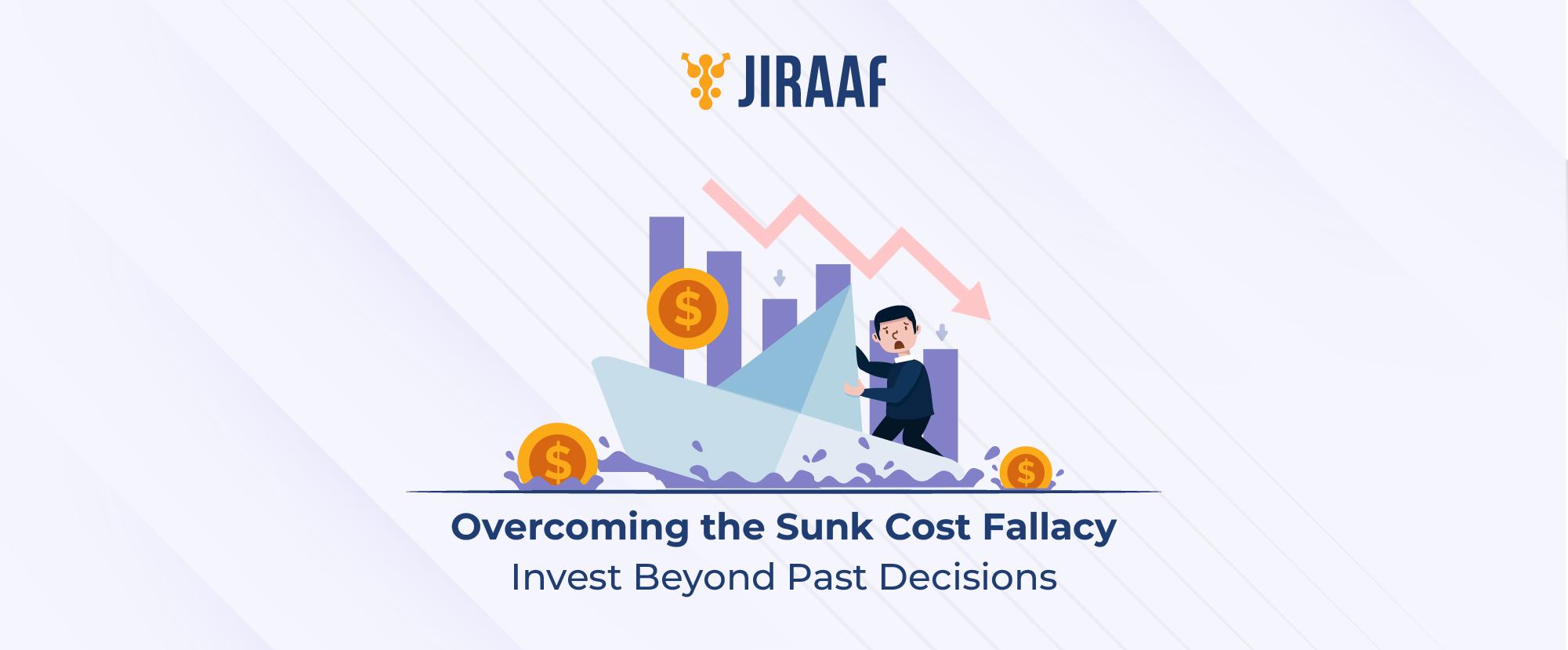
The sunk cost fallacy is a behavioral bias that causes investors to hold on to loss-making investments because of the time, money, or effort already invested, instead of evaluating their future potential objectively.
Every investor makes mistakes. However, the difference between successful and unsuccessful investing often lies in what happens next. Some investors accept a bad decision, learn from it, and move on. Others continue committing more time, money, and effort, hoping to justify a decision that no longer makes financial sense. This tendency is known as the sunk cost fallacy.
Let’s understand why this bias occurs, how it affects investment decisions, and what investors can do to overcome it.
What is the Sunk Cost Fallacy in Investing?
The sunk cost fallacy is a cognitive bias in behavioral finance that affects personal decisions, businesses, and investing alike. It occurs when investors become reluctant to exit a loss-making investment because of the time, effort, or money they have already committed. So rather than evaluating the investment based on its future potential, they allow past costs to influence their decision.
As a result, investors often continue holding, or even increase their exposure to, loss-making investments despite the costs outweighing the potential benefits. This can lead to even greater losses of capital, time, and opportunity.
In many ways, the sunk cost fallacy encourages investors to do the exact opposite of one of investing’s most enduring principles: cut your losses short and let your winners run.
Why Investors Struggle to Exit Losing Positions?
The sunk cost fallacy can be closely linked with loss aversion cognitive bias. It makes the pain of losing money feel stronger than the satisfaction of making an equivalent gain. As a result, many investors prefer to postpone realizing a loss rather than accepting it, even when the investment’s future prospects have weakened.
The challenge here is to accept that the money, time, and effort already invested are sunk costs and they cannot be recovered regardless of whether the investor continues holding the investment or sell it. Rational investment decisions should therefore depend on future opportunities and expected returns, not on resources that have already been spent.
Common Examples of the Sunk Cost Fallacy in Finance & Investing
The traits of sunk cost fallacy extend to personal, business, and financial settings. Here are two common examples:
Holding on to a Failing Mutual Fund
An investor has invested in an actively managed mutual fund for several years. Over time, the mutual fund consistently underperforms its benchmark and comparable funds. Despite the weak performance, the investor refuses to switch because they have already invested significant money and waited several years for better returns. Instead of evaluating whether the fund can meet their future financial goals, they remain focused on recovering their past investment.
Continuing an Unprofitable Business Project
A company spends several years and substantial capital developing a new product. As the project progresses, market demand weakens, costs continue to rise, and the expected returns no longer justify further investment. Even so, the company continues funding the project because abandoning it would mean accepting that the earlier investment cannot be recovered. This often results in even greater financial losses than if the project had been discontinued earlier.
Recognizing these situations is the first step toward overcoming the sunk cost fallacy. The next step is learning how to separate past investments from future decisions and make more objective investment choices.
How Investors can Avoid the Sunk Cost Fallacy
Investors can reduce their influence by adopting a more objective decision-making process. The following approaches can help prevent past investments from dictating future financial decisions.
Accept the Reality of Sunk Costs
Investors should recognize that money, time, and effort already spent cannot be recovered, regardless of whether they continue holding an investment or exiting it. Accepting this reality allows future decisions to be based on current facts rather than past commitments.
Consider the Opportunity Cost
Capital locked in an underperforming investment cannot be deployed elsewhere. Evaluating the opportunity cost helps investors determine whether holding a loss-making position is preventing them from pursuing better investment opportunities.
Focus on Future Return Potential
Investment decisions should be guided more by an asset’s future prospects than its purchase price. If the underlying fundamentals have deteriorated, previous investments should not influence the decision to continue holding the position.
Seek an Objective Perspective
Emotional attachment can make it difficult to evaluate an investment objectively. Consulting a financial advisor or seeking an independent opinion can help investors challenge their assumptions and make more rational decisions.
Ultimately, overcoming the sunk cost fallacy requires investors to focus on future outcomes rather than past investments, allowing them to make more disciplined and objective investment decisions.
Conclusion
The sunk cost fallacy reinforces one of investing’s most valuable lessons: objectivity often matters more than conviction. Sticking with an investment simply because of past commitments can cloud judgement and limit better opportunities. Investors who regularly reassess their decisions with a clear, forward-looking perspective are more likely to build resilient portfolios over the long run.