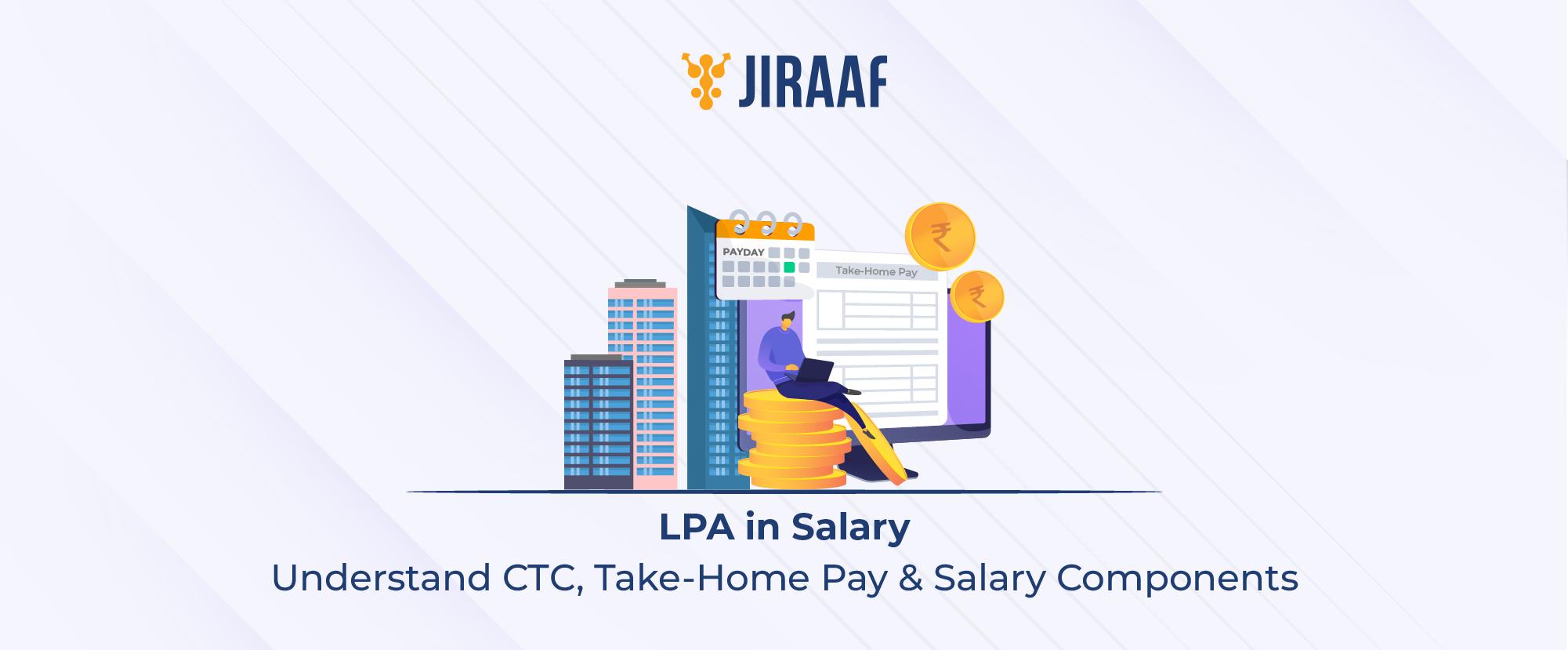
LPA (Lakhs Per Annum) is a common way to quote annual salary in India. While a ₹12 LPA offer may sound like ₹1 lakh per month, your actual take-home pay can be lower because CTC may include employer contributions, variable pay, gratuity, insurance, and other benefits.
Two people can be offered the same ₹12 LPA and still end up with different monthly salaries. The difference is not necessarily in the headline number, it can be hidden in how that number is structured. Various salary components change what the offer actually means for you.
So, when you see an LPA figure on a job offer, what are you really being offered? This guide breaks down LPA, how companies calculate it, and how much you can expect to take home.
What is LPA in Salary?
LPA stands for Lakhs Per Annum and is a common way to express annual salary in India. You will often see it in job offers, pay slips, HR discussions, job portals, campus placement offers, and appraisal letters.
LPA generally refers to the total annual compensation a company offers an employee. In most cases, the LPA mentioned in a job offer refers to the Cost to Company (CTC) rather than the amount you receive in your bank account.
What Does Your LPA Include?
Your LPA can include several salary and employment-related components, depending on how the company structures your CTC:
- Basic salary: The fixed component of your salary
- Dearness Allowance (DA): A salary component paid to employees to offset the impact of inflation and rising living costs
- House Rent Allowance (HRA): An allowance provided for housing expenses, if applicable
- Special allowances: Components such as travel, internet, or other allowances
- Bonuses: Annual or performance-based payments
- Employer’s PF contribution: The contribution your employer makes towards your provident fund
- Gratuity: A component that many companies include in the CTC
- Group insurance premiums: Premiums paid by the employer for benefits such as group health or term life insurance
The exact components and their share of your LPA can vary from one company to another. To understand what your stated LPA actually means for your salary, the next step is to see how it is calculated.
How is LPA Calculated?
Let’s understand this with an example.
When a company offers you a salary of ₹12 LPA, it most likely means your annual CTC is ₹12 LPA. This is a cumulative figure which is made by adding the different components your employer provides as part of your total compensation.
Annual CTC = Fixed Salary + Employer Contributions + Variable Pay + Other Benefits
For example, if your basic salary, allowances, employer PF contribution, bonus, gratuity, and other benefits together amount to ₹12 lakh a year, your CTC is ₹12 LPA.
However, your CTC is not the same as the amount you receive in your bank account each month. To understand what you actually take home, you need to look at the deductions from your salary.
LPA to In-Hand Salary: How Much Will You Get?
In practice, your monthly in-hand salary will be lower because CTC can include employer contributions, variable pay, gratuity, insurance, and other benefits.
Here is an illustrative ₹12 LPA CTC breakup to show how this can work:
| Salary Component | Annual Amount (₹) |
| Basic salary | ₹4,80,000 |
| House Rent Allowance (HRA) | ₹2,40,000 |
| Special allowance | ₹2,10,000 |
| Employer PF contribution | ₹57,600 |
| Gratuity | ₹23,080 |
| Performance bonus | ₹1,00,000 |
| Group insurance & other benefits | ₹89,320 |
| Total CTC | ₹12,00,000 |
For this ₹12 LPA structure, the annual CTC works out to ₹1 lakh per month when divided across 12 months. However, the amount credited to your account will depend on which components are actually paid through payroll and the deductions applicable to you.
Based on the illustrative breakup above, your fixed cash components total ₹9.30 lakh a year, or about ₹77,500 per month before employee-side deductions. The remaining ₹2.70 lakh consists of components such as employer contributions, gratuity, performance-linked pay, and other benefits.
This gives you a more realistic starting point for estimating your monthly in-hand salary. Your final take-home amount will depend on the deductions applicable to your salary structure.
Factors That Affect Your Take-Home Salary
Even with the same LPA, your monthly take-home can differ from someone else’s. The difference often comes down to how your employer structures your salary and the deductions applicable to you.
- Salary structure: The proportion of basic pay, allowances, and other components can change your monthly payout.
- Taxable income: Your taxable salary and the deductions or exemptions you are eligible for can affect your tax liability.
- Tax regime: The tax regime you choose can change the amount of income tax deducted from your salary.
- Variable compensation: A higher share of performance-linked pay can make your monthly income less predictable.
- Location and payroll rules: State-specific deductions, such as professional tax where applicable, can also affect your final salary.
So, your LPA is best viewed as the annual compensation figure, while your take-home salary reflects what your specific salary structure and payroll deductions leave you with each month.
Conclusion
A salary offer is more than the number printed next to “LPA.” The real value of a package lies in what it offers you today, what it rewards over time, and how much of it depends on future performance. Looking beyond the headline figure can therefore give you a more realistic view of an opportunity, not just as a salary number, but as part of your overall career and financial decision.