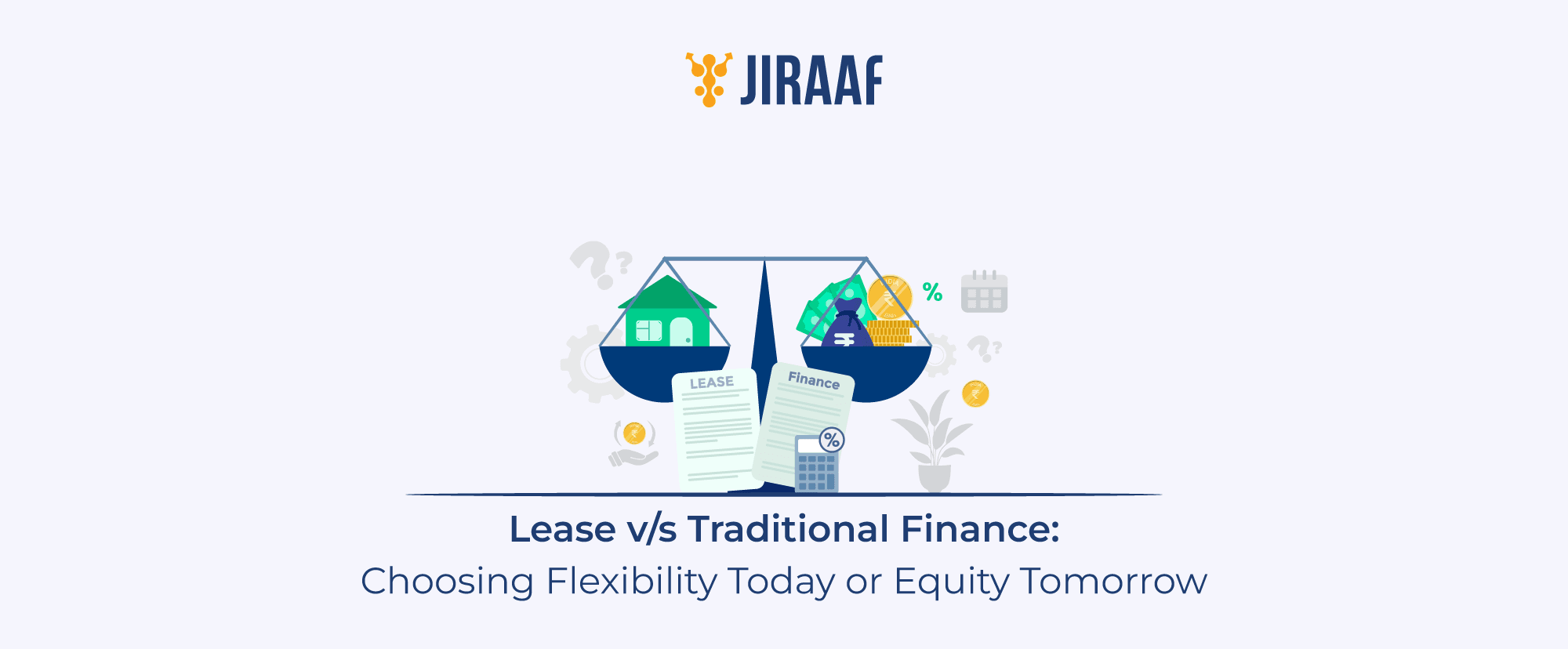
Choosing how to acquire an asset is as important as choosing the asset itself. Understand leasing, financing, and outright purchases to make a more informed financial decision.
Acquiring an asset is a crucial purchase decision for individuals and organizations alike. Whether it’s acquiring equipment, a vehicle, or any high-value asset, the way it is funded impacts liquidity, risk exposure, and long-term returns.
As a result, choosing the right financing approach becomes essential. Leasing, traditional financing, and outright purchase represent the three primary ways to structure this decision, each with distinct implications for ownership and cash flow.
This blog breaks down how each method works, compares them side by side, and helps you understand which option aligns best with your financial position and usage needs.
What is Leasing?
Leasing is a contractual arrangement where a lessor (asset owner) grants a lessee (user) the right to use an asset for a fixed period in exchange for periodic payments, known as lease rentals. So, instead of purchasing the asset outright, the lessee pays for its usage while preserving capital. Leasing is commonly used for assets like machinery, vehicles, and equipment, especially when businesses want operational control without upfront ownership.
In practice, leasing follows a structured process. The lessee identifies the asset and enters into a lease agreement with the lessor (often a bank, NBFC, or leasing company). The lessor purchases the asset and allows the lessee to use it under agreed terms.
A typical lease agreement covers:
- Lease term: The duration for which the asset can be used
- Payment structure: Lease rentals (fixed or variable) and their payment frequency
- Ownership terms: Whether ownership transfers to the lessee at the end or remains with the lessor
- Maintenance and insurance: Responsibility for upkeep, servicing, and associated costs
- Termination clauses: Conditions under which the lease can be ended before maturity
- Residual value: The estimated value of the asset at the end of the lease term
At the end of the lease, the lessee may renew the agreement, return the asset, or purchase it (if a buyout option exists).
For those who prefer to move beyond usage and build ownership over time, traditional financing offers a different path.
What is Traditional Financing?
Traditional financing refers to acquiring an asset by borrowing funds from a financial institution like a bank or NBFC and repaying the amount over time through Equated Monthly Instalments (EMIs). Unlike leasing, where you pay for usage, traditional financing is structured to give the borrower usage rights and a pathway to full ownership upon complete repayment, though the lender typically holds a charge over the asset (via hypothecation for movable assets, or mortgage for immovable property) until all dues are cleared.
The process typically begins with the borrower selecting an asset and applying for a loan. The lender evaluates factors such as creditworthiness, income stability, and repayment capacity before sanctioning the loan. Once approved, the funds are disbursed to the seller, and the borrower begins repayment over a fixed tenure.
A typical financing arrangement includes:
- Loan amount: Based on the asset value (may require a down payment)
- Interest rate: Fixed or floating, determining the cost of borrowing
- Repayment tenure: Duration over which EMIs are paid
- Collateral/security: The asset itself or additional guarantees
- Ownership: The borrower has usage rights, while the lender may hold a charge until full repayment
Although traditional financing requires an individual to pay more (borrowed amount + interest + fees), it leads to complete ownership at the end of the term, so the borrower owns the underlying asset outright and can buy, sell or hold the asset, whatever they desire.
Comparison: Leasing vs Traditional Financing vs Outright Purchase
| Parameter | Leasing | Traditional Financing | Outright Purchase |
| Definition | Paying for the right to use an asset over a fixed period without owning it upfront | Borrowing funds from a lender to purchase an asset and repaying through EMIs | Buying the asset outright using your own funds with immediate ownership |
| Cash Outflows | Lower upfront cost; periodic lease rentals | Moderate to high; includes down payment + EMIs (principal + interest) | High upfront cost; full payment made at the time of purchase |
| Flexibility | Options to upgrade, renew, or return the asset | Locked into repayment schedule with limited flexibility | Capital is tied up with limited flexibility to redeploy funds |
| End of Term Option | Renew lease, return asset, or purchase (if option exists) | Full ownership after loan repayment | Already owned; can sell, hold, or use as desired |
| Risks | Usage restrictions, no ownership benefit, long-term cost may be higher | Interest cost burden, risk of default, asset repossession if EMIs are missed | Liquidity risk (capital locked), depreciation risk, opportunity cost of funds |
| Taxation | Lease rentals are generally treated as business expenses or salary deductions, reducing taxable income (primarily in the case of car leasing); GST is applicable on rentals | Interest portion of the EMI may be tax-deductible under specific conditions (e.g., home loans) and depreciation benefits may be claimed on the asset if it is used for business purposes | Limited direct tax benefit, though stamp duty/registration costs may be deductible under Section 80C and depreciation can be claimed over time if the asset is used for business purposes |
Advantages and Disadvantages of Leasing
Leasing is often preferred when the focus is on usage, flexibility, and preserving capital rather than owning the asset outright.
Advantages of Leasing
- Lower upfront investment: Leasing requires minimal initial capital, helping preserve cash flow for other business or personal needs.
- Operational flexibility: Assets can be upgraded, replaced, or returned at the end of the lease, making it suitable for rapidly changing requirements.
- Reduced maintenance burden (in some cases): Many lease agreements include servicing or maintenance, lowering operational hassle.
- Off-balance sheet benefits (in some cases): Under certain accounting standards (like AS 19 or Ind AS 116), some leases may offer specific balance sheet reporting advantages.
Leasing works well when the priority is flexibility and liquidity over long-term ownership. However, it has potential downsides when considering other aspects.
Disadvantages of Leasing
- No ownership benefit: The lessee does not build equity in the asset unless a buyout option is exercised.
- Long-term cost may be higher: Over time, total lease payments can exceed the cost of outright ownership.
- Usage restrictions: Lease agreements may impose limits on usage, modifications, or early termination.
While leasing offers unique features, it may not be ideal for those seeking long-term value creation through ownership.
Advantages and Disadvantages of Traditional Financing
Traditional financing is structured for individuals or businesses aiming to own the asset while spreading the cost over time.
Advantages of Traditional Financing
- Ownership from the outset: The borrower gains control over the asset, with full ownership upon repayment.
- No usage restrictions: Unlike leasing, there are typically no limitations on how the asset is used or modified.
- Long-term value retention: The asset can be sold, refinanced, or used as collateral in the future.
- Asset appreciation: The owner benefits if the market value of the asset increases (primarily applicable to real estate).
Traditional financing is suitable when ownership and long-term value are key priorities. However, the potential downsides should be considered as well.
Disadvantages of Traditional Financing
- Higher financial commitment: Requires a down payment and ongoing EMIs, increasing cash flow pressure.
- Interest cost burden: The total cost of acquisition includes interest, making it more expensive than the asset’s base price.
- Risk of default: Failure to meet repayment obligations can lead to penalties or repossession of the asset.
While financing enables ownership, it comes with higher financial obligations and long-term commitments.
Conclusion
There is no one-size-fits-all answer to asset acquisition. The choice between leasing, financing, or buying the asset outright depends on factors like cash flow position, risk appetite, and long-term plans for the asset.
A clear understanding of these factors can help individuals and organizations select the approach that fits their current situation rather than following a generic preference.