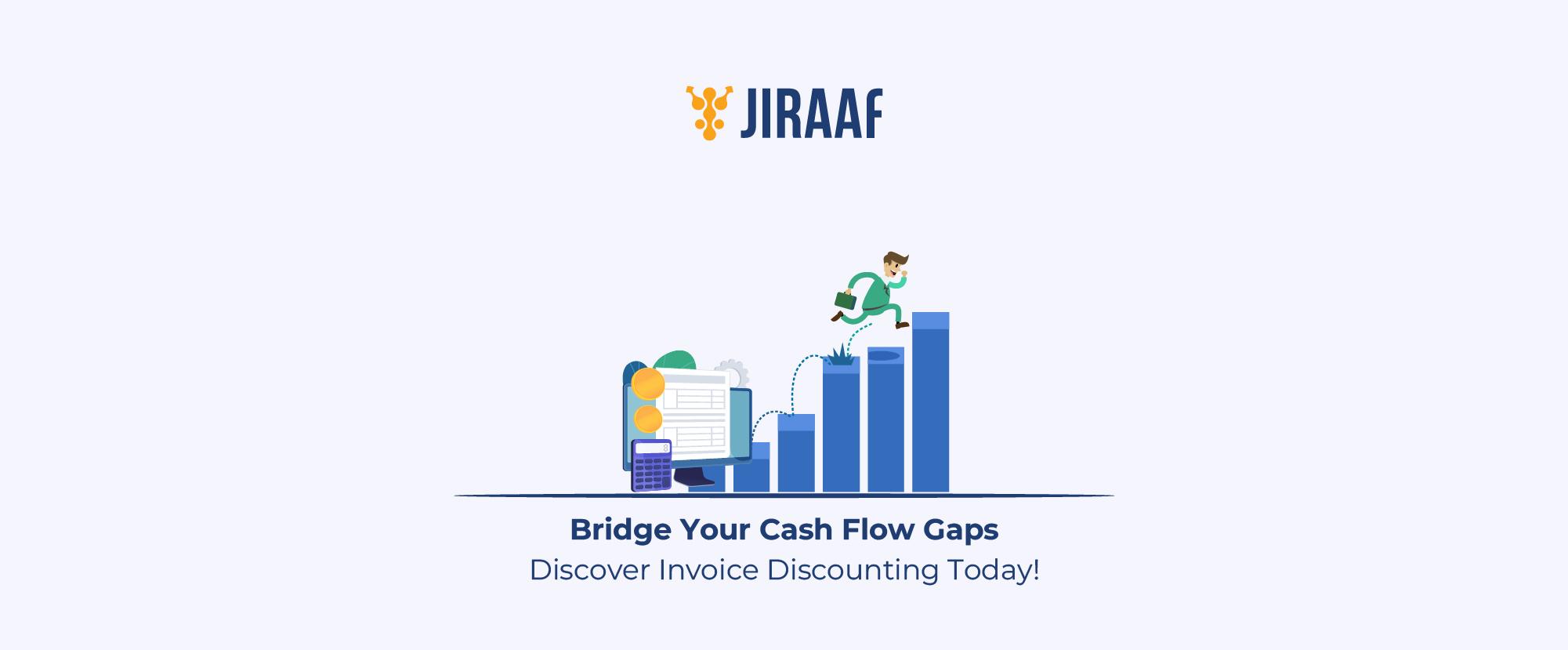
Businesses often find themselves in a frustrating paradox: they’ve done the work, issued the invoice, and are owed the money, but they still have to wait 30 to 90 days before a single rupee lands in their account. This gap between earning and receiving can choke a company’s growth, delay vendor payments, and limit its ability to take on new opportunities. Invoice discounting is the financial tool that bridges this gap. By converting outstanding invoices into immediate cash, businesses can keep their operations running smoothly without waiting on slow-paying clients or taking on traditional debt.
At its core, invoice discounting is a financing strategy where a business sells its unpaid invoices to a lender or digital platform at a slight discount in exchange for immediate funds. Instead of waiting for customers to pay, companies receive 70–90% of the invoice value upfront. The remaining balance is released once the customer settles the bill, minus a “discount fee” that serves as the financier’s profit. It’s a clean, flexible mechanism, and one that is rapidly reshaping how Indian businesses manage working capital.
How Does Invoice Discounting Work?
The process is straightforward. A business provides goods or services to a client and issues an invoice with a payment term of 30 to 90 days. Rather than waiting out that term, the business approaches a bank, an NBFC, or an online marketplace (KredX, CashFlo, TradeCred, etc.). The financier evaluates the risk based on the creditworthiness of both the borrowing business and the end customer. Once approved, typically within 24 to 72 hours, the financier releases 80–90% of the invoice value upfront. On a ₹10 lakh invoice, for example, the business receives ₹8–9 lakh almost immediately. When the customer pays on the due date, the financier transfers the remaining balance to the business after deducting the agreed discount fee.
The simplicity of this process is one of the reasons invoice discounting has taken off so rapidly, but businesses also have the flexibility to tailor which type of arrangement suits them best.
Types of Invoice Discounting
Not all invoice discounting works the same way, and the right type depends on a business’s specific needs and risk tolerance.
In recourse discounting, the business bears the risk if the customer defaults on payment. This is the most common arrangement for MSMEs because it comes with lower financier fees. In non-recourse discounting, the financier assumes the default risk, a popular choice for exporters dealing with international clients, where recovery can be difficult and unpredictable.
For businesses that don’t want to discount their entire ledger, selective discounting allows them to choose specific invoices, making it ideal for startups or companies that experience only occasional cash flow gaps. Finally, there’s a distinction between confidential and disclosed discounting. In the confidential model, the customer is unaware their invoice has been discounted; useful for service providers who want to maintain a traditional billing relationship. In the disclosed model, the client is notified and pays the financier directly, which is commonly used by SMEs working with large corporate buyers.
Each of these models serves a different business profile, which is part of why invoice discounting has found such wide adoption, and why the Indian market for it has grown to a remarkable scale.
The Indian Market: A Growing Giant
India’s invoice discounting market has undergone a dramatic transformation in recent years. In 2018, the market was valued at ₹8 lakh crore, and even that figure highlighted the massive unmet funding need among Indian MSMEs. Today, monthly transaction volumes in the Indian ecosystem exceed ₹1 lakh crore, equivalent to roughly $120 billion. With over 60 million MSMEs in the country, analysts estimate the market could reach ₹12–13 lakh crore annually by the end of FY25.
This explosive growth has been supported by the RBI’s Trade Receivables Discounting System (TReDS) framework, which provides a regulated, transparent infrastructure for invoice discounting through registered platforms. The formalization of this ecosystem has also attracted a new category of participants: individual investors.
Invoice Discounting as an Investment Opportunity
Beyond its utility for businesses, invoice discounting has emerged as a compelling alternative asset class for investors seeking better returns than traditional fixed deposits. Investors can browse invoice listings on platforms, choose invoices that match their risk appetite, and earn annual returns of 10–20% over short investment cycles of just 30 to 90 days. Because returns are tied to business transactions rather than market movements, invoice discounting also offers a degree of diversification from equity market volatility.
That said, it’s not without its risks. If the buyer defaults on the invoice, investors in recourse arrangements could face capital loss. Unlike mutual funds, the money is locked in until the invoice matures, so there’s no early exit. And while the regulatory framework is strengthening, private platforms are still evolving compared to more established asset classes governed by RBI and SEBI. For investors comfortable with moderate risk and short holding periods, though, the risk-return profile is difficult to ignore.
Pros and Cons: Businesses vs. Investors
For businesses, the biggest advantage is the immediate injection of working capital without taking on additional debt or diluting ownership. The flexibility to discount invoices selectively, only when needed, adds another layer of appeal. The downside is that discount fees reduce overall profit margins, and in recourse arrangements, the business remains on the hook if a customer defaults.
For investors, the attractions are the high short-term returns and the low correlation to stock markets. The limitations are the illiquidity during the investment term and the risk of buyer default. Compared to a fixed deposit, invoice discounting offers higher returns, but those returns come with higher risk, since they are not government-guaranteed.
Who Should Use Invoice Discounting?
Invoice discounting is best suited for MSMEs that have reliable corporate clients and need working capital without the complexity of traditional bank loans. The ability to get funded within 24 to 72 hours, with no new debt on the balance sheet, makes it particularly attractive for businesses experiencing growth or seasonal cash flow pressure.
On the investor side, it appeals to individuals looking for better short-term returns than FDs and who are comfortable with moderate credit risk over 30 to 90 day windows. Those who want portfolio diversification beyond stocks, bonds, and real estate will find it a genuinely different asset class.
How to Get Started
For businesses and investors alike, getting started is relatively simple. Choose a platform, either an RBI-registered TReDS exchange or an established private marketplace, and complete the KYC process with your identification and bank verification. Businesses can then submit invoices for funding, while investors can browse available invoices, evaluate the underlying risk, and commit capital. Upon invoice maturity and customer payment, investors receive their principal plus returns, and businesses receive the final balance after fees.
Conclusion
Invoice discounting has quietly evolved from a niche financial instrument into one of the most practical and scalable tools in India’s financial ecosystem. For businesses, it eliminates the painful wait between issuing an invoice and receiving payment, freeing up capital to grow, invest, and operate. For investors, it offers a rare combination of short tenors, attractive returns, and diversification from traditional markets, all underpinned by real commercial transactions.
As India’s MSME sector continues to expand and the TReDS ecosystem matures with stronger regulatory backing, invoice discounting is set to become even more mainstream. Whether you’re a business owner looking to unlock cash from your receivables, or an investor searching for yield in a short-term, tangible asset, invoice discounting is a mechanism worth understanding, and worth considering.