Bond laddering is a fixed-income strategy that spreads investments across bonds with different maturities to manage risk and liquidity. This guide explains how a bond ladder works, its benefits and risks, and how investors can build one around their financial goals.
You often invest in bonds because of their stability and predictability. Features like fixed coupons, defined maturities, and clearer cash flows make them a natural choice for mitigating risk in your overall portfolio. And holding a single bond or concentrating exposure to one maturity can work well in stable conditions.
Yet over longer horizons or unstable market environments, this investing approach becomes susceptible to challenges such as interest rate, credit, liquidity, and reinvestment risks.
One effective way to mitigate these risks and build a well-diversified bond portfolio is through bond laddering. In this blog, we’ll break down how bond ladders work, why they’re effective, and how you can build one aligned with your financial goals.
Bond Ladder Strategy Explained
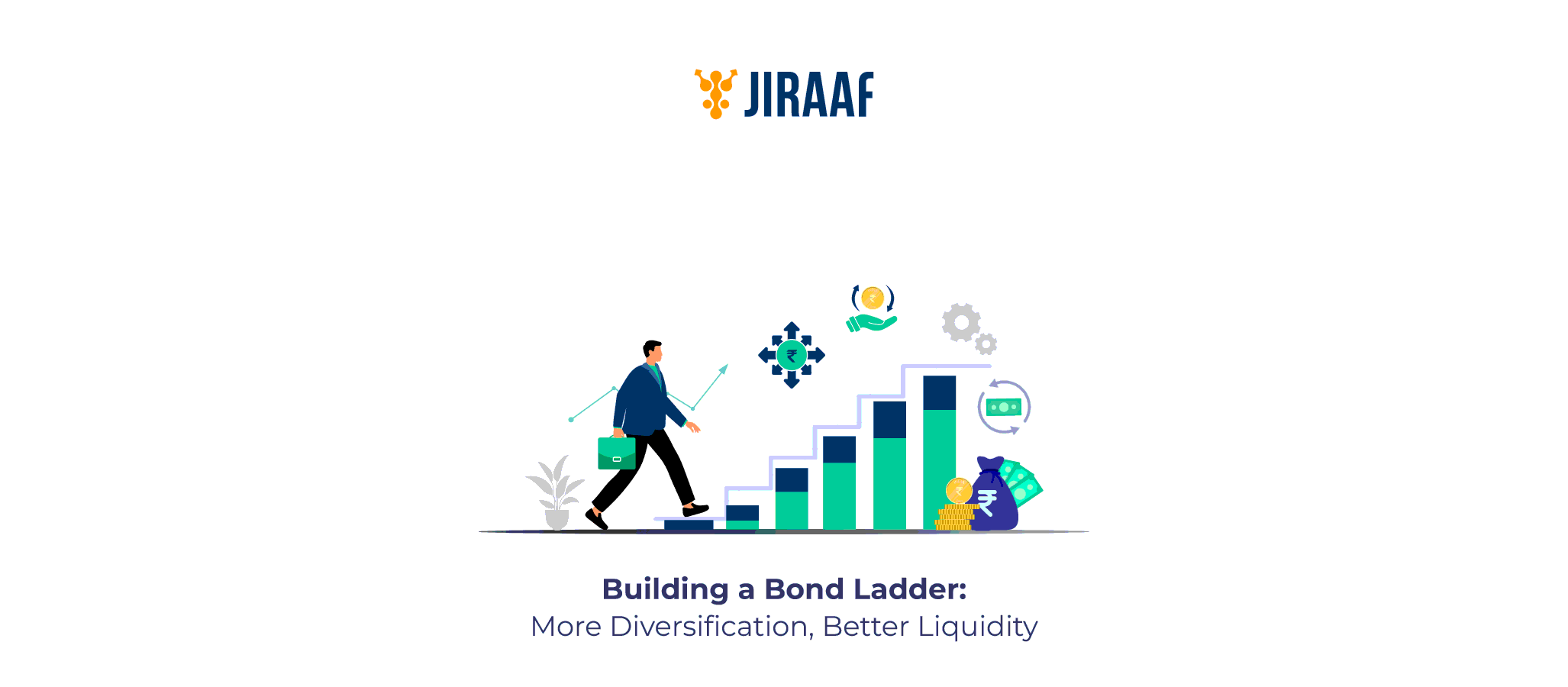
A bond ladder is a fixed-income investment strategy, primarily used for diversifying your bond portfolio while ensuring that a portion of your invested capital becomes available at regular and pre-planned intervals.
It involves adding multiple bonds with different maturity periods, issuers, and credit ratings into your bond portfolio. So, instead of investing all of your capital into a single bond or maturity, your portfolio is evenly spread across bonds that mature at staggered intervals. This way, bond laddering allows you to customize your bond portfolio in line with your financial goals.
You can build a bond ladder using government securities, corporate bonds, or a combination of both, depending on your return expectations and risk appetite.
For example, suppose you have ₹5 lakh to invest in bonds. Rather than committing the entire amount to a single long-term bond, you can divide it into five equal investments of ₹1 lakh each and allocate them to bonds maturing in one to five-year periods. As each bond matures, you reinvest the proceeds into the farthest end of the ladder, keeping the strategy intact.
Let’s understand this better with a more detailed example.
How to Create a Bond Ladder?
Assume you have ₹5,00,000 to invest in bonds. You decide to build a bond ladder with five rungs, spread across five different maturity periods. To keep the structure balanced, you can allocate ₹1,00,000 to each bond. Based on this approach, your bond ladder could be structured as follows.
| Year | Bond Type | Expected Yield (%) per annum | Allocation (₹) |
| 1 | Short-term Corporate and Government Bonds | 9% to 11% | ₹1,00,000 |
| 2 | A and BBB- rated Bonds | 13% to 15% | ₹1,00,000 |
| 3 | AA and A- rated Bonds | 12% to 14% | ₹1,00,000 |
| 4 | Corporate Bonds (AAA and AA- rated) | 9% to 10% | ₹1,00,000 |
| 5 | PSU and other AAA rated Bonds | 7.5% to 9% | ₹1,00,000 |
The above table shows that each ₹1,00,000 tranche can be allocated based on your risk–return expectations across different maturity periods.
- Year 1
You can allocate ₹1,00,000 to short-term government securities or high-quality corporate bonds that are maturing in a year, bringing near-term liquidity to your portfolio.
- Year 2
You can invest ₹1,00,000 in A and BBB-rated bonds for the second-year tranche, allowing you to lock in higher yields of 13% to 15%.
- Year 3
Allocating ₹1,00,000 to AA and A-rated bonds helps strike a balance between safety and return, with yields typically ranging from 12%–14%.
- Year 4
Placing ₹1,00,000 in AAA and AA-rated corporate bonds adds strength to the longer end of the ladder, offering steady returns of about 9%–10%.
- Year 5
Finally, investing ₹1,00,000 in PSU bonds or other AAA-rated instruments anchors the ladder with high credit quality and relatively stable yields of 7.5%–9%.
As a bond matures every year, you continue to reinvest the principal and interest received into a new 5-year bond. For example, once the 1-year bond matures, you reinvest the proceeds into the farthest end of the ladder. This helps in maintaining the ladder’s structure, and your bond ladder keeps rolling while adapting to the changing market conditions.
This rolling approach also ensures that:
- You have sufficient liquid funds every year for emergencies or reinvestment.
- You benefit from higher yields of longer-term bonds while still capturing new opportunities as rates change.
However, before you start building your own bond ladder, it’s worth understanding the finer details that can make the difference between a stable, income-generating bond ladder and an inefficient one.
Things to Consider while Building a Bond Ladder
A bond ladder helps you in adding both structure and stability to your portfolio. To increase its efficiency, you should consider factors such as:
- Investment horizon
Determine your investment timeline. It should align with your financial goals, whether you are planning to build an opportunity fund, an education fund in 5 years, or a corpus for wedding expenses in 10 years.
- Capital requirements
While bonds can be purchased for as little as ₹1,000 through Online Bond Platform Providers (OBPPs) such as Jiraaf, creating a well-diversified bond ladder usually requires a larger capital base; typically, ₹5 to ₹10 lakh or more, to ensure effective spread across maturities and issuers.
- Market conditions
Prevailing market interest rates can have a big impact on your bond ladder. For instance, when the interest rates are rising, you can lock in higher yields by reinvesting the proceeds from your matured bond. However, when rates move lower, reinvestment can happen at reduced yields.
Over time, your bond ladder creates a steady stream of income, reduces interest rate risk, and keeps your portfolio flexible. Here are other major benefits of building a bond ladder.
Benefits of Using a Bond Ladder
A bond ladder comes with some built-in advantages, especially if you’re managing a fixed-income portfolio with a long-term view.
- Regular access to cash
Because different bonds mature at different intervals, money flows back to you periodically. This gives you steady access to cash without forcing you to sell bonds early or disturb the rest of your portfolio.
- Smoother handling of interest rate changes
Staggered maturities help soften the impact of rising or falling interest rates. Rather than being exposed to one big rate move at a single point in time, your portfolio adjusts gradually as bonds mature and are reinvested.
- Promotes goal-based investing
Bond laddering makes it easier to plan ahead. You can match bond maturities with specific needs; whether that’s funding an expense, reinvesting at a later stage, or building predictable income over time.
- Built-in diversification
A bond ladder reduces your dependency on any single bond. This diversification helps limit the damage from credit issues or market disruptions affecting one part of the portfolio.
Overall, a bond ladder adds structure and flexibility, allowing your fixed-income investments to work more smoothly across different market conditions.
While building a bond ladder mitigates the prominent risks associated with bond investing, this strategy isn’t fully risk-proof. Let us look at the risks and limitations of bond laddering.
Risks and Limitations of Bond Laddering
Even though it is a smart strategy, bond laddering still remains exposed to certain market and issuer-related risks.
1. Credit risk
There is always a chance that a bond issuer’s pocket may get into trouble. When this happens, the issuer can default on its commitment, triggering a drop in the credit rating.
A credit rating drop leads to a drag down in the bond’s value or disrupts the expected interest and principal payments. While a bond ladder doesn’t remove this risk completely, laddering across several investment-grade issuers ensures that a downgrading in one bond won’t have a substantial impact on your entire bond portfolio.
2. Liquidity risk
A bond ladder does not eliminate liquidity risk entirely. If you require funds outside these planned maturity dates, you may need to sell a bond in the secondary market, which can disrupt the ladder’s structure and affect returns.
3. Interest rate risk
If your bond matures at the time when interest rates are dropping, reinvesting in new bonds will earn you lower returns, reducing the overall returns of your bond ladder.
Does Bond Ladder Offer a Full Immunity Against All Risks?
Every bond investment will be susceptible to credit rating shifts, liquidity constraints, and reinvestment uncertainty. This is a part of fixed-income investing, no matter what bond strategy you deploy. A bond ladder doesn’t necessarily immune your bond portfolio to all these risks, but it does give you a structured framework for handling the risks calmly, without having to react hastily to every market move.
What makes the strategy powerful is the balance it creates. Shorter-term bonds give you regular cash flow and reinvestment options, while longer-term bonds help lock in yields for the future.
By thoughtfully aligning maturities with your financial goals and carefully selecting creditworthy bonds, you can create a bond portfolio that adapts to changing interest rates without derailing your investment objectives.